

“It sounded great,” frontman Roger Daltrey said of the sessions
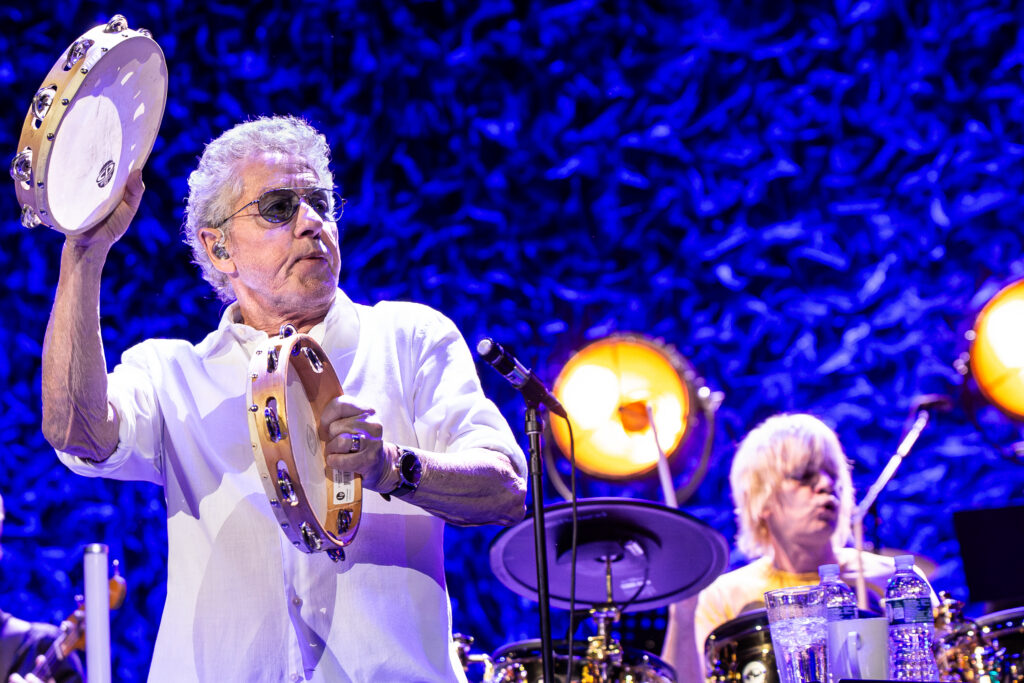
The Who may be regrouping again with a familiar face behind the drum kit.
While in the midst of his solo shows at the Encore Theater in Las Vegas, frontman Roger Daltrey confirmed that the band has reunited with longtime drummer Zak Starkey following a bitter split last year. The Who subsequently embarked on their farewell tour of North America without Starkey on drums. Now, it looks like The Who might not be done just yet.
“It sounded great,” Daltrey told the Las Vegas Review-Journal.
Starkey echoed the sentiment on social media, stating, “Lookin forward to tearin it up with the Who again. The rehearsal was great. I don’t think we’ve ever rehearsed as tough as that. Usually we drink tea and talk about what time we’re going home!”
While The Who seem to be open to performing live again, Roger slammed the door shut on any residences – including Sphere.
“I think the management may have had talks about playing there, but when I think about it, I don’t know whether [Sphere] it really interests me,” Daltrey stated. “I think the Sphere’s got its place. There’s no doubt about that, and it is an extraordinary thing. But I like the energy from a show just to come from the stage. There’s something for me about just the old-fashioned stage without the cock walk. For me, the cock walk just completely disrupts the energy of the show.”
For nearly three decades, Zak Starkey occupied one of the most scrutinized drum stools in rock history, becoming the closest thing The Who ever had to a long-term successor to Keith Moon. The son of Beatles drummer Ringo Starr, Starkey had an unusually personal connection to the group: Moon was a family friend and one of Starkey’s early drumming influences, even giving him a drum kit when he was a child. After working with artists including Oasis, Starkey became The Who’s regular touring drummer in 1996, beginning with the band’s revival of Quadrophenia. Over the ensuing 29 years, he developed a powerful but disciplined approach that captured much of Moon’s explosive spirit without simply imitating him, accompanying Roger Daltrey and Pete Townshend through tours, reunion performances and late-career albums. That lengthy association made the events of spring 2025 especially startling, as Starkey was fired, rehired and then fired again within the space of roughly a month, just as The Who prepared for what they billed as their final North American tour.
The trouble became public following The Who’s Teenage Cancer Trust concerts at London’s Royal Albert Hall in March 2025. During the March 30 performance, Daltrey became visibly frustrated during “The Song Is Over,” stopping the performance and complaining that he was having difficulty hearing what he needed to sing because of the volume coming from the drums. “To sing that song I do need to hear the key, and I can’t,” Daltrey told the audience, adding that all he could hear was the drums going “boom, boom, boom.” The moment immediately attracted attention because it appeared to expose a genuine disagreement onstage rather than the sort of good-natured friction that had always been part of The Who’s personality. Starkey later disputed the idea that his playing was responsible for the problem. He maintained that the song had not been sufficiently rehearsed, had been rearranged and shortened, and that Daltrey had actually entered a section a bar early. Starkey said he subsequently received a call from longtime Who manager Bill Curbishley informing him that he would no longer be needed, with the explanation that Daltrey believed he had dropped beats during the performance. Starkey later said he repeatedly watched footage of the concert and could not identify the alleged mistakes.
On April 16, news broke that Starkey and The Who had parted company. The band’s representative initially characterized the move as a “collective decision,” saying The Who had “nothing but admiration” for Starkey and wished him well. Starkey, however, made clear that he had not expected the dismissal. He said he was proud of his nearly 30 years with the group and described filling the shoes of his godfather, “Uncle Keith,” as the greatest honor of his career. He also expressed surprise that anyone would take serious issue with his performance after he had played The Who’s music for so many years. On social media he responded with characteristic sarcasm, joking about facing “formal charges of overplaying.” Behind the humor was an extraordinary situation: a musician who had been an essential part of The Who’s live sound since the mid-1990s had apparently lost his job largely because of disagreement surrounding a single concert.
Then, almost as suddenly, Starkey was back. On April 19, only three days after reports of his dismissal emerged, Townshend issued a statement under the headline “Who Back Zak!” and declared that Starkey was “not being asked to step down from The Who.” Townshend described the episode as the result of personal and private communication problems that had now been addressed. He acknowledged that the Royal Albert Hall shows had been difficult, noting that he himself was still recovering from a complete knee replacement and suggesting the group might not have devoted enough time to soundchecks. Townshend did say that Starkey had made “a few mistakes” and that he and Daltrey wanted the drummer to adjust his evolving style to better suit The Who’s non-orchestral lineup. Starkey had agreed. Townshend also accepted responsibility for some of the confusion, writing that the dispute had received too much attention and concluding, “It’s over. We move forward now with optimism and fire in our bellies.”
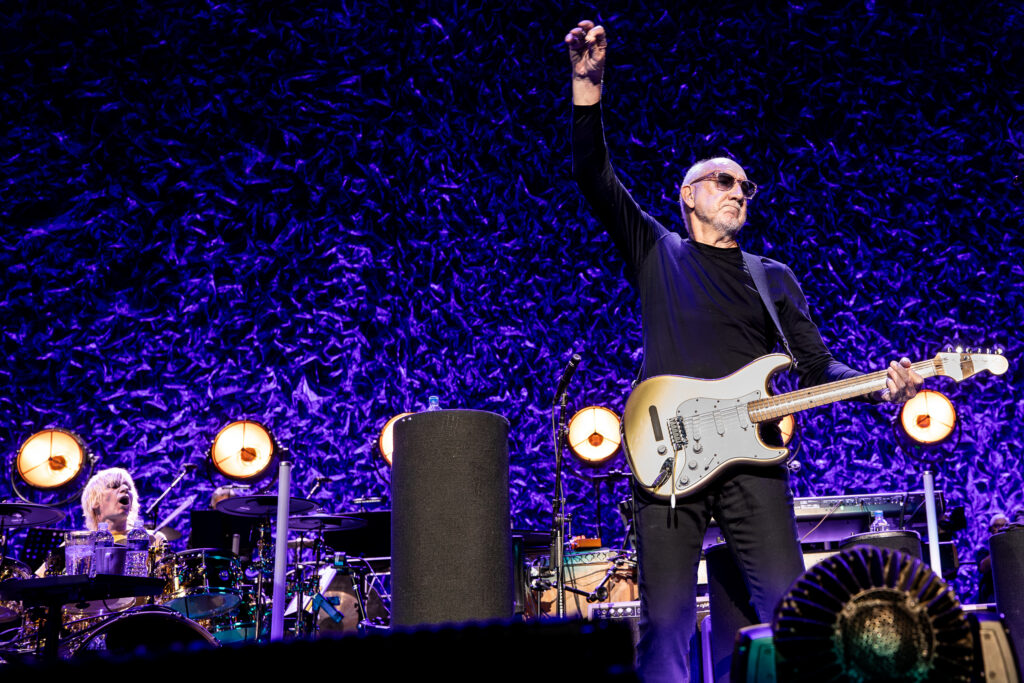
The reconciliation appeared to restore one of The Who’s longest-running musical partnerships at a particularly important moment. On May 8, Daltrey and Townshend formally announced The Song Is Over – The North American Farewell Tour, describing the 2025 run as their final tour of the United States and Canada. The name came from the same Who’s Nextsong that had been at the center of the Royal Albert Hall controversy. The tour was designed as a grand North American goodbye, with stops in major markets including New York, Philadelphia, Boston, Chicago, Los Angeles, Las Vegas, Seattle, Toronto and Vancouver. Given Starkey’s reinstatement weeks earlier, there was every reason to assume that the drummer who had helped carry The Who’s music for almost 30 years would be behind the kit for the farewell.
Instead, another reversal arrived in mid-May. Townshend announced that Starkey was out of The Who once again, writing, “After many years of great work on drums from Zak the time has come for a change.” He called it “a poignant time,” referred to Starkey’s other projects and wished him well. The band announced that Scott Devours, who had spent years playing drums with Daltrey’s solo band, would take Starkey’s place for the farewell tour. The choice was particularly notable because Devours had already been rumored as Starkey’s potential replacement during the first firing in April. At that time, Townshend had specifically apologized to Devours for failing to shut down the rumor quickly enough, insisting that the drummer had merely been caught up in speculation. Barely a month later, the supposedly inaccurate rumor had effectively become reality.
Starkey quickly challenged any suggestion that his second departure was voluntary. He said he had actually been fired about two weeks after being reinstated and claimed he was asked to issue a statement saying he had chosen to leave The Who to concentrate on other musical projects. Starkey refused, arguing that such a statement would be untrue. “I love The Who and would never have quit,” he wrote. Although he acknowledged having outside projects—as he had throughout his career—he insisted they had never interfered with his commitments to the band. In a later interview, Starkey offered a more detailed account, saying that after the first dismissal Townshend had asked whether he was willing to “fight” for his job. The drummer was ultimately reinstated, but according to Starkey, roughly two weeks later he was informed that Daltrey could no longer work with him and that the group wanted him to present his departure as a decision to pursue other interests. Starkey refused to do so.
The wording surrounding his exit became almost as contentious as the firing itself. Starkey later said Daltrey characterized the move as a “retirement” rather than a firing, apparently because Starkey had other musical commitments. Starkey rejected that explanation, pointing out that he was available for The Who’s relatively short farewell itinerary and had expected to spend the fall touring with the band. In his account, the disagreement ultimately came back to the Royal Albert Hall performances and Daltrey’s dissatisfaction with his playing. Starkey also made clear that he believed Townshend had been placed in the middle of the dispute. Despite the increasingly public war of words, Starkey continued to emphasize his affection for The Who and his pride in what the musicians had accomplished together.
The episode brought an unexpectedly messy conclusion to one of The Who’s most important late-career partnerships. Starkey was never technically a member of the original quartet, but after nearly 30 years behind the kit he had become inseparable from the modern incarnation of the band. He had helped Townshend and Daltrey preserve music originally defined by Moon’s almost impossible-to-replicate drumming, while developing enough of his own identity to prevent the performances from becoming nostalgia exercises. The timing made his dismissal particularly poignant. Instead of joining Townshend and Daltrey for their announced North American goodbye, Starkey watched as Devours took over the drum chair for The Song Is Over tour, which was scheduled to begin August 16, 2025, in Sunrise, Florida. What initially looked like a disagreement over one difficult performance had escalated into two firings, a brief reconciliation and a very public dispute about whether Starkey had quit, been retired or simply been dismissed. Whatever terminology was used, the result was unmistakable: after 29 years, The Who headed into their North American farewell without the drummer who had done more than anyone since Keith Moon to define the sound of the band from behind the kit.