

The band returned to their ultra-heavy roots for their twelfth studio effort
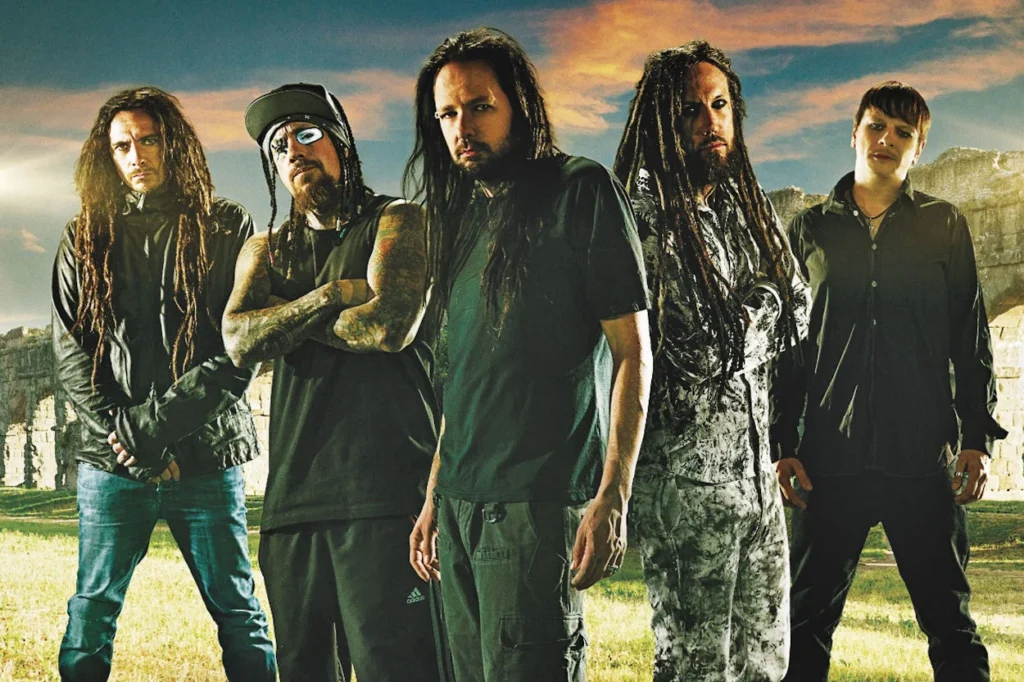
On this day 10 years ago, Korn unleashed their twelfth studio album The Serenity of Suffering.
The release marked a powerful return to the dark, aggressive sound that helped establish the band as pioneers of nu metal in the 1990s. Arriving three years after 2013’s The Paradigm Shift, the album saw frontman Jonathan Davis, guitarists James “Munky” Shaffer and Brian “Head” Welch, bassist Reginald “Fieldy” Arvizu, and drummer Ray Luzier reconnecting with the crushing guitar riffs, haunting melodies, and emotionally charged songwriting that defined their earlier work. Produced by Nick Raskulinecz, whose previous credits included Foo Fighters, Rush, and Alice in Chains, the record was developed through collaborative writing sessions that emphasized the band’s chemistry and a heavier, more organic musical approach. Raskulinecz encouraged the musicians to embrace the interplay between their instruments, particularly the distinctive seven-string guitar attack of Shaffer and Welch. Davis subsequently developed lyrics exploring personal struggles, emotional turmoil, isolation, and inner conflict, giving the album its bleak but cathartic atmosphere. The result was one of Korn’s most ferocious and focused releases in years, balancing the raw intensity of their early material with the polished production of their later records.
Among the album’s standout tracks was the explosive lead single “Rotting in Vain,” which immediately reminded longtime fans of Korn’s signature combination of crushing riffs, unsettling atmospheres, and Davis’ unmistakable vocal delivery. The song became a favorite among fans and received significant rock radio airplay, while its accompanying music video featured actor Tommy Flanagan. Other highlights included “Insane,” which opened the record with relentless aggression, “Black Is the Soul,” which showcased the band’s ability to balance haunting melodies with punishing heaviness, and “Take Me,” a deeply personal song addressing addiction and destructive behavior.
Another major track, “A Different World,” featured guest vocals from Slipknot and Stone Sour frontman Corey Taylor, bringing together two of modern metal’s most recognizable voices. Songs such as “The Hating,” “Everything Falls Apart,” and “When You’re Not There” further demonstrated Korn’s renewed commitment to their heavier roots. Upon its release, The Serenity of Suffering received generally positive reviews from critics, many of whom praised its aggressive instrumentation, strong production, and return to the band’s classic sound. Longtime fans also embraced the record, particularly the renewed musical chemistry between Shaffer and Welch, whose intertwined guitar work had been a defining element of Korn’s earliest albums.
Commercially, The Serenity of Suffering debuted at No. 4 on the Billboard 200, earning approximately 57,000 equivalent album units in its first week in the United States, including roughly 55,000 in traditional album sales. The achievement gave Korn another Top 10 album and demonstrated their continued commercial relevance more than two decades after the release of their groundbreaking 1994 debut. The record also performed well internationally, reaching the Top 10 in several markets, including the United Kingdom, Australia, and Germany. Although a verified worldwide lifetime sales total has not been publicly established, its approximately 55,000 first-week U.S. pure sales remain one of its most widely reported commercial figures. The album was supported by extensive touring, with Korn performing alongside acts including Breaking Benjamin, Motionless in White, and Stone Sour during the surrounding touring cycle.
A decade after its release, The Serenity of Suffering stands as an important chapter in Korn’s career, representing a successful creative resurgence for a band that had spent years experimenting with different musical directions. By reconnecting with the aggression, vulnerability, and distinctive sound that made them influential, Korn delivered a record that reaffirmed their place among modern metal’s most enduring and recognizable acts.