

If it was the band’s final live performance, it was a great way to go out
For more than five decades, AC/DC have remained one of rock and roll’s most formidable live acts, proving time and time again that a handful of unforgettable riffs, a thunderous rhythm section, and an electrifying stage presence can still command the attention of an entire stadium. On Friday, October 2, 2026, the Australian hard rock legends brought their massive Power Up Tour to a spectacular conclusion at MetLife Stadium in East Rutherford, New Jersey, delivering more than two hours of timeless anthems, blistering guitar solos, and enough raw energy to remind everyone why they remain among the greatest rock bands of all time. What was already destined to be a monumental evening became something even more special thanks to an unexpected appearance by Foo Fighters, a surprise collaboration between two generations of rock royalty, and the lingering possibility that the audience was witnessing AC/DC’s final concert.
The evening was originally scheduled for September 25, but a powerful nor’easter sweeping through the New York and New Jersey region forced organizers to postpone the performance due to dangerous weather conditions. The concert was rescheduled for October 2, a decision that unexpectedly transformed the MetLife Stadium appearance into the final stop of AC/DC’s sprawling Power Up Tour, which began in Europe in May 2024. The postponement also created a scheduling conflict for the band’s regular opening act, The Pretty Reckless, who had commitments at California’s Aftershock Festival and could no longer participate in the rescheduled show. Fortunately, an extraordinary replacement was waiting in the wings. Foo Fighters, who had previously stepped in for The Pretty Reckless during AC/DC’s September 8 performance at The Dome at America’s Center in St. Louis, Missouri, were once again recruited to open the show. What initially appeared to be an unfortunate weather-related disruption ultimately produced one of the most impressive stadium rock double bills imaginable.
Despite another brief rainstorm passing through the area before showtime, the skies cleared in time for the music, leaving the massive audience to enjoy an unusually warm October evening. With temperatures reaching approximately 80 degrees, the atmosphere felt more like the height of summer than the beginning of autumn. Thousands of fans had gathered throughout the afternoon, filling the stadium parking lots with tailgating parties, AC/DC merchandise, and the unmistakable anticipation surrounding what had suddenly become a potentially historic concert. By the time Foo Fighters took the stage at 7 p.m., the enormous venue was ready for a celebration of rock and roll that would stretch well into the night.
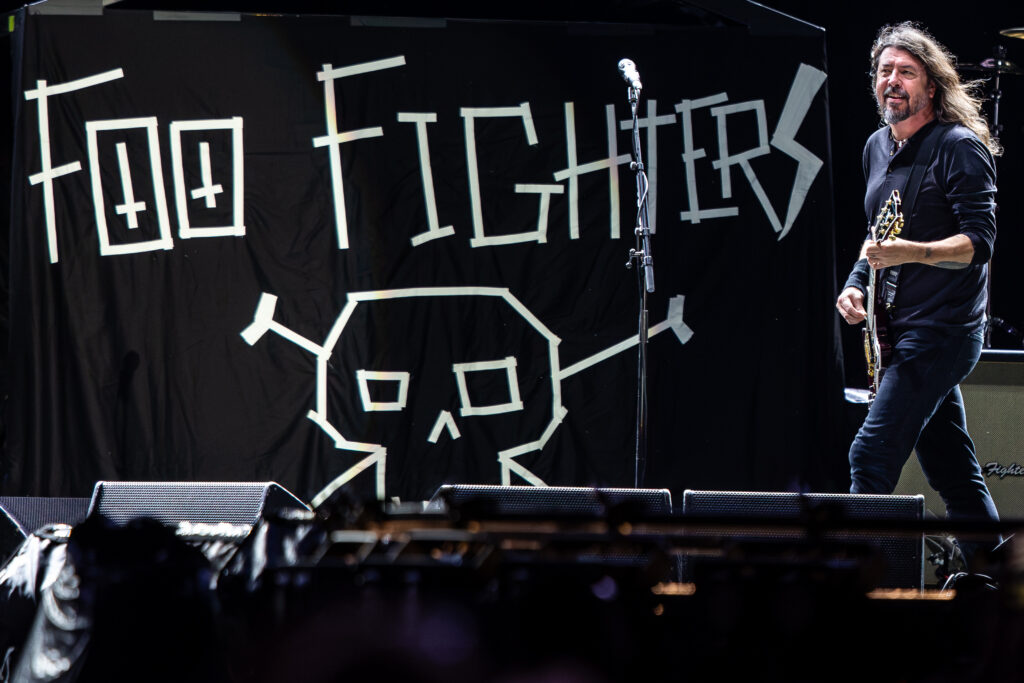
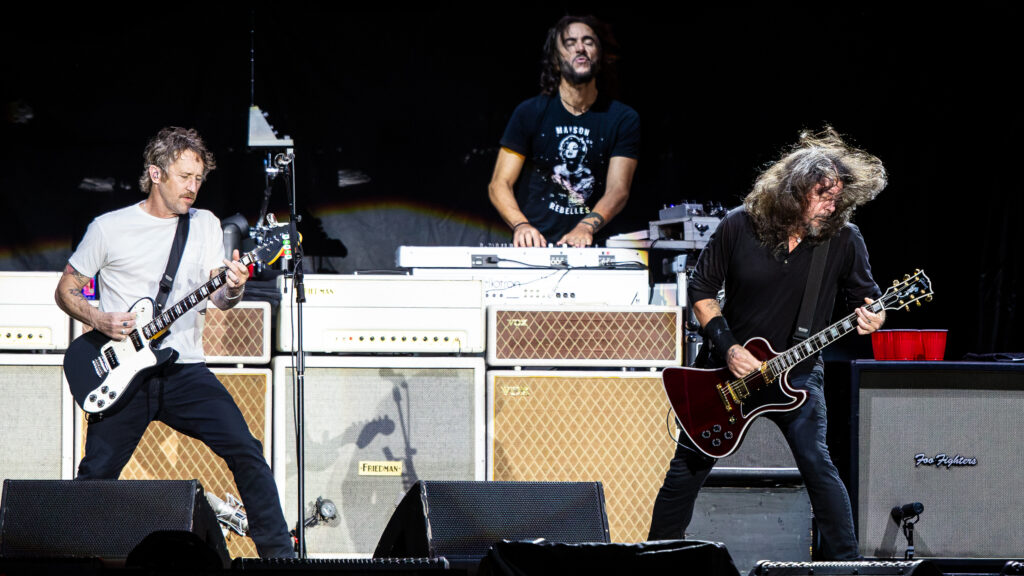
It is not often that a band capable of headlining stadiums around the world finds itself serving as an opening act, but Foo Fighters approached the opportunity with the enthusiasm of musicians fulfilling a lifelong dream. Frontman Dave Grohl made no secret of his admiration for AC/DC, and that excitement translated into a relentlessly energetic nine-song performance that could easily have served as the centerpiece of an entirely separate concert. Opening with the explosive one-two punch of “All My Life” and “The Pretender,” Foo Fighters immediately established an intensity that never diminished throughout their abbreviated set. Grohl’s gritty vocals and commanding stage presence were complemented by the band’s powerful guitar attack and driving rhythms, giving the audience a concentrated dose of the music that has made Foo Fighters one of the defining rock acts of the past three decades. “Times Like These” provided an emotional change of pace before building into a soaring stadium anthem, while “My Hero” and “Learn to Fly” inspired enormous singalongs throughout the venue. The inclusion of “This Is a Call,” from the band’s 1995 debut album, offered a welcome reminder of their earliest days, demonstrating just how far Grohl and his band have come since their humble beginnings.
The second half of Foo Fighters’ performance maintained that momentum, with “Monkey Wrench” delivering another burst of adrenaline, complete with a drum solo, before “Best of You” brought thousands of voices together for one of the evening’s most passionate singalongs. Grohl also took a moment to explain the profound influence AC/DC had on his musical journey, recalling how seeing the band’s Let There Be Rock concert film at age 11 completely transformed his understanding of what rock and roll could be. He spoke about the sweat, intensity, and total commitment that defined AC/DC’s performances, explaining that the experience inspired him to pursue music for the rest of his life. It was a heartfelt acknowledgment from one of rock’s biggest stars to the musicians who helped inspire him. Foo Fighters fittingly concluded their performance with “Everlong,” arguably their most beloved song, sending the audience into another massive singalong and bringing their approximately hour-long set to a triumphant close. Although they were technically the opening act, Foo Fighters performed with the confidence, passion, and power of a band that could have filled MetLife Stadium on its own. Their appearance was far more than a last-minute substitution; it was a celebration of the enduring connection between generations of rock musicians.
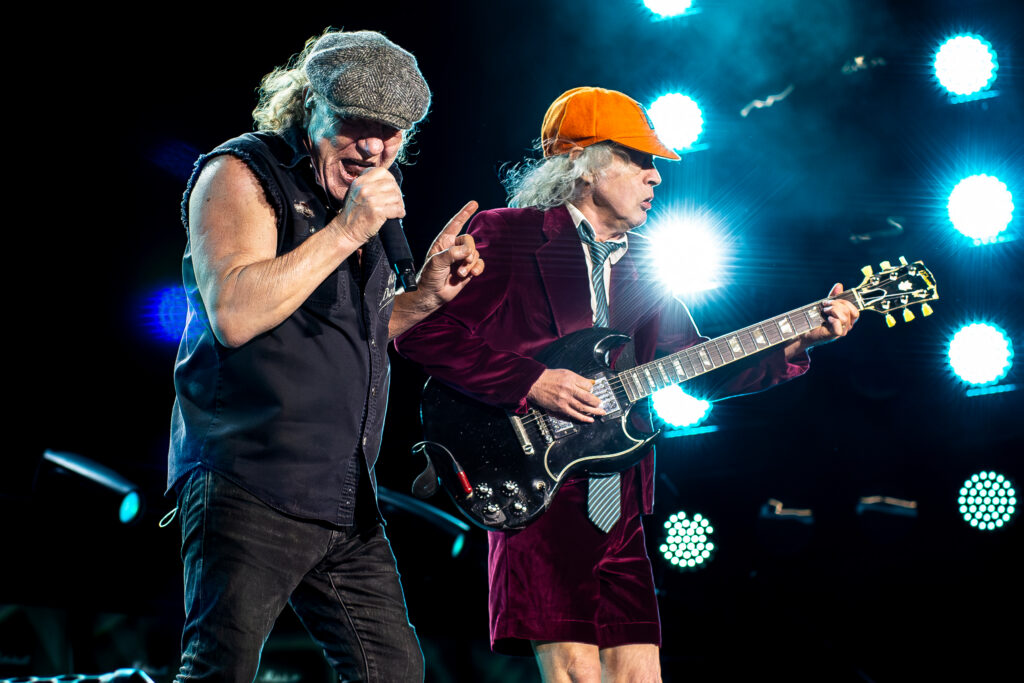
Shortly after 8:30 p.m., the anticipation reached its peak as the stadium’s enormous video screens came to life, signaling the arrival of the evening’s headliners. When AC/DC launched into “If You Want Blood (You’ve Got It),” the response was deafening. From the opening guitar riffs, it was immediately apparent that the band had no intention of treating this as just another tour stop. Guitarist Angus Young, dressed in his trademark schoolboy uniform, commanded the stage with the same mischievous intensity and boundless energy that have defined his performances for decades. Meanwhile, frontman Brian Johnson, approaching his 79th birthday, delivered the band’s unmistakable vocals with remarkable strength, sounding like a man determined to prove that age was little more than a number. Together with rhythm guitarist Stevie Young, bassist Chris Chaney, and drummer Matt Laug, AC/DC delivered a tight, thunderous performance built around the no-nonsense hard rock formula that has made them legendary.
The band’s opening stretch was nothing short of spectacular. “Back in Black” immediately sent the audience into a frenzy, its iconic opening riff ringing throughout the stadium as tens of thousands of fans sang along. The ferocious “Demon Fire,” from 2020’s Power Up, demonstrated that AC/DC’s more recent material could stand comfortably alongside their most celebrated classics. “Shot Down in Flames” kept the momentum moving before “Thunderstruck” provided one of the evening’s defining moments. As Angus Young unleashed the song’s instantly recognizable opening guitar figure, the stadium erupted, with fans raising their arms and shouting along to every familiar refrain. The sheer scale of the response illustrated the timeless appeal of AC/DC’s music, which continues to unite multiple generations of fans.
“Have a Drink on Me” followed before the unmistakable tolling of a massive bell announced “Hells Bells,” another highlight of the performance. The sight of the enormous bell suspended above the stage, combined with the song’s ominous opening guitar riff, created one of the concert’s most impressive visual moments. Johnson’s raspy delivery brought the classic to life, while Angus Young prowled the stage, effortlessly commanding attention with every note. “Shot in the Dark” offered another selection from Power Up, while “Stiff Upper Lip” added a welcome dose of blues-infused hard rock. Throughout the opening portion of the performance, the band sounded remarkably focused and cohesive, demonstrating that despite their advancing years, they could still deliver the kind of loud, uncompromising rock and roll that has filled arenas and stadiums for generations.
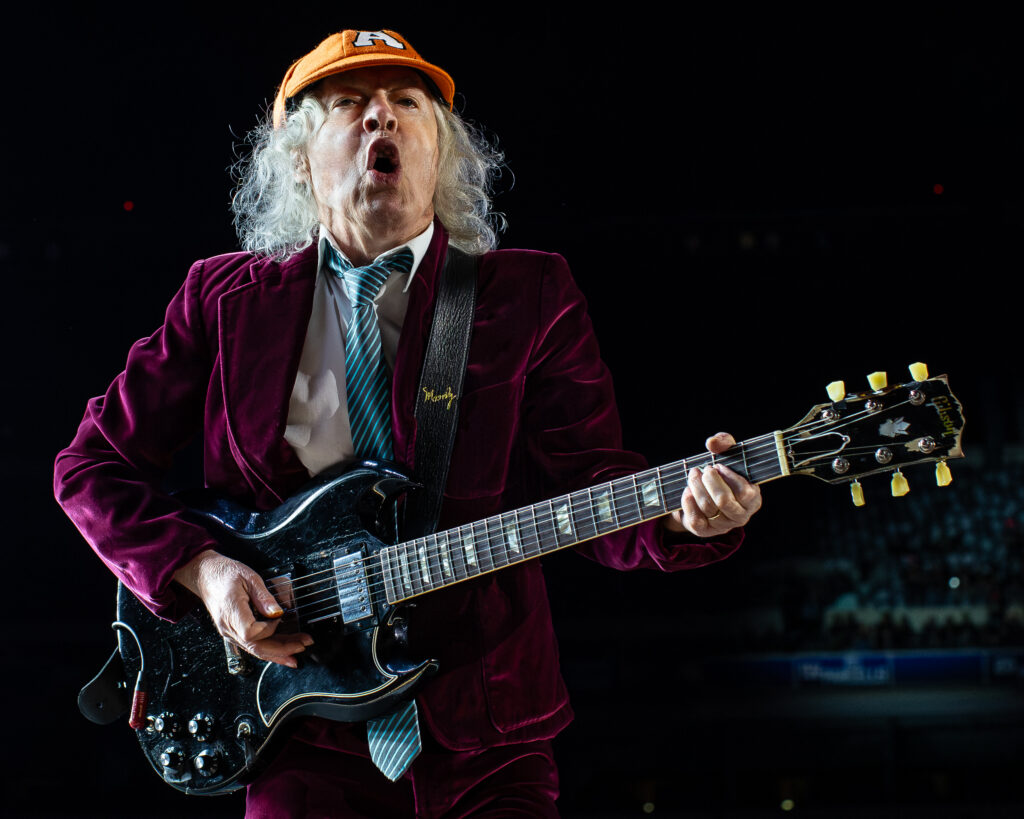
As if the evening had not already provided enough excitement, AC/DC had one extraordinary surprise waiting for the audience. Midway through the performance, Brian Johnson paused to announce that a special guest had requested the opportunity to join the band for one of its most beloved songs. That guest was none other than Dave Grohl, who returned to the stage with a guitar to perform the 1979 classic “Highway to Hell.” The announcement sent a wave of excitement throughout MetLife Stadium, as fans realized they were about to witness a rare collaboration between two of rock’s most celebrated acts. Grohl joined Angus Young, Johnson, and the rest of AC/DC on guitar and backing vocals, enthusiastically participating in a song that had helped define the very music he grew up idolizing.
The moment carried a significance that extended far beyond the novelty of seeing two famous musicians share a stage. Earlier in the evening, Grohl had explained how profoundly AC/DC had influenced him as a child, and now, more than four decades later, he was standing alongside his heroes performing one of the most recognizable songs in rock history. His excitement was unmistakable as he enthusiastically played along with Angus Young and added his voice to the chorus. For the audience, it was a once-in-a-lifetime moment, but for Grohl, it represented the fulfillment of a childhood dream. It also perfectly captured the spirit of the entire evening: a celebration of rock and roll’s enduring power to inspire musicians and audiences across generations. Considering that AC/DC have rarely welcomed outside musicians into their live performances, the collaboration was an especially memorable addition to what was already shaping up to be a historic tour finale.
Following Grohl’s departure, AC/DC wasted little time returning to business. “Shoot to Thrill” brought another surge of energy, followed by the gritty blues-rock swagger of “Sin City” and the sprawling “Jailbreak,” both of which highlighted the band’s deep catalog beyond its most recognizable radio hits. “Dirty Deeds Done Dirt Cheap” prompted another massive audience response, while “High Voltage” and “Riff Raff” offered a welcome return to the group’s early, rough-edged sound. These selections served as reminders of the band’s origins during the Bon Scott era, when AC/DC were establishing themselves as one of Australia’s most exciting rock exports before conquering the rest of the world.
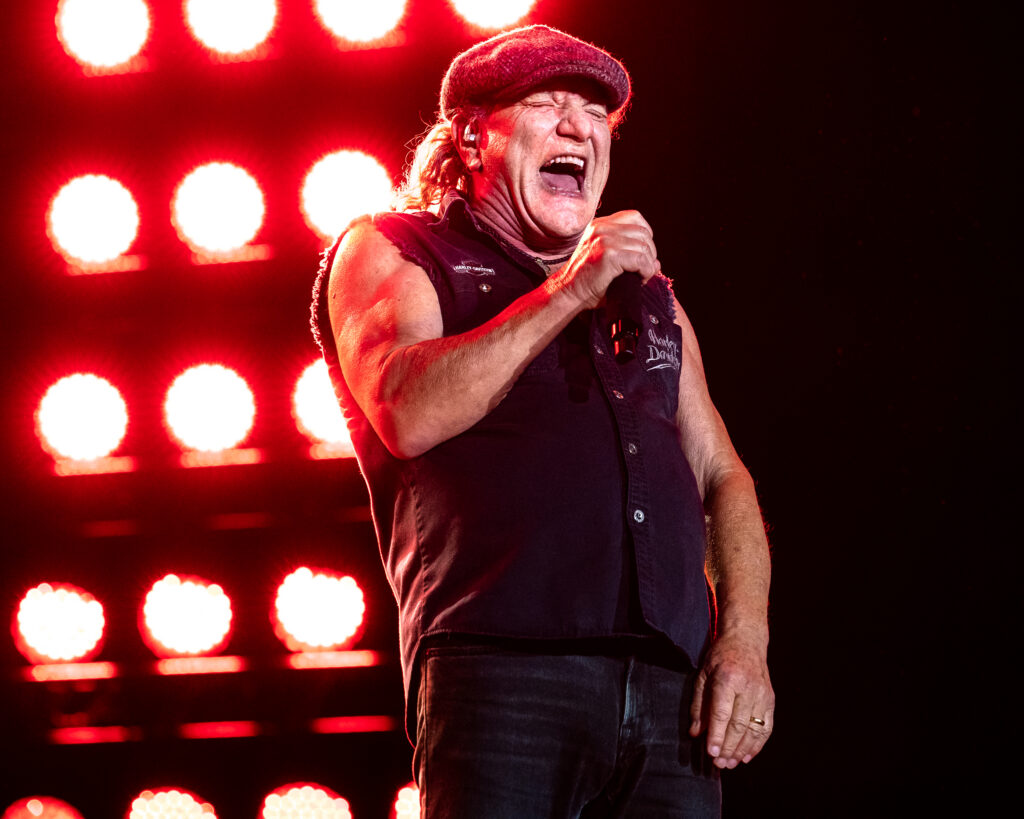
As the performance moved toward its conclusion, AC/DC continued delivering one classic after another. “You Shook Me All Night Long” transformed MetLife Stadium into an enormous singalong, with seemingly every member of the audience joining Johnson for the chorus. “Whole Lotta Rosie” followed, providing another showcase for Angus Young’s explosive guitar playing and the band’s relentless rhythm section. The main set reached its spectacular climax with “Let There Be Rock,” which evolved into an extended instrumental showcase for Angus. For approximately 10 to 15 minutes, the legendary guitarist commanded the stage with a marathon solo that combined blistering fretwork, theatrical showmanship, and the physical intensity that has made him one of rock’s most recognizable performers. Even at 71 years old, Young moved with astonishing energy, proving that the fire that fueled AC/DC’s rise to international superstardom remains very much alive.
After more than two hours of music, AC/DC returned for a two-song encore that delivered everything fans could have hoped for. “T.N.T.” ignited another enormous singalong, its explosive chorus echoing throughout the stadium before the band prepared to deliver its traditional closing anthem. As the unmistakable opening notes of “For Those About to Rock (We Salute You)” rang out, the anticipation built toward the moment that has become synonymous with AC/DC’s live performances. The song’s thunderous conclusion was punctuated by the firing of the band’s signature cannons and a spectacular display of fireworks, bringing the concert to a fittingly explosive finish. It was an extraordinary conclusion to a night filled with memorable performances, unexpected surprises, and a celebration of some of the greatest songs ever written in hard rock.
Perhaps the most impressive aspect of AC/DC’s performance was the remarkable resilience of the musicians themselves. Brian Johnson, who was forced to leave the band’s Rock or Bust Tour in 2016 because of serious hearing problems, delivered a commanding vocal performance that would have seemed almost unimaginable a decade earlier. His return to the stage and continued ability to front one of the world’s biggest rock bands remains one of rock’s most remarkable comeback stories. Angus Young, meanwhile, continues to defy expectations, maintaining an extraordinary level of physical intensity despite spending more than five decades running, duckwalking, and throwing himself across stages around the world. Although the current lineup differs significantly from the group that recorded many of these classics, the spirit of AC/DC remains unmistakably intact. Their music has never relied on elaborate arrangements or changing trends, and the MetLife Stadium performance demonstrated why their straightforward approach to rock and roll remains as effective as ever.
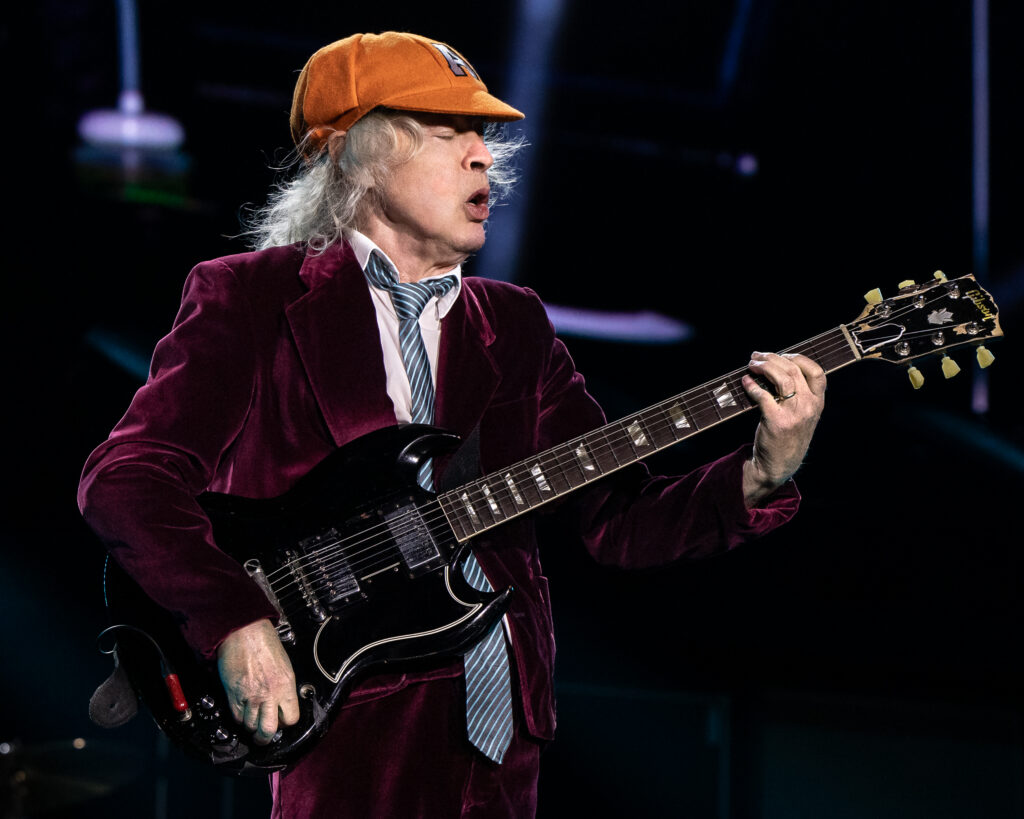
There was also an unmistakable sense of history surrounding the evening. What began as a postponed stadium concert had become the final performance of a world tour that stretched across more than two years, marking another extraordinary chapter in the band’s storied career. The Power Up Tour, launched in support of their 2020 studio album of the same name, represented a triumphant return for a band that had endured numerous personal and professional challenges, including the death of founding rhythm guitarist Malcolm Young in 2017, Johnson’s hearing difficulties, and years of uncertainty surrounding the group’s future. Yet here they were, standing before another enormous stadium audience, proving that their music still resonates with fans of all ages.
As the final notes faded and the band prepared to leave the stage, Johnson offered a farewell that carried an unexpectedly emotional weight, thanking the audience, expressing his love for the fans, and saying that he hoped they would see each other again. His parting words left the possibility of another tour open, but they also served as a reminder that nothing about AC/DC’s future can be taken for granted.
Ultimately, the October 2 performance at MetLife Stadium may be remembered as much more than simply the final show of the Power Up Tour. There is a very real possibility that the audience witnessed AC/DC’s final concert. With Angus Young now in his seventies and Brian Johnson approaching eighty, the realities of age cannot be ignored, even for musicians who continue to perform with such remarkable energy. AC/DC have also become notorious for taking extended breaks between studio albums and major tours, sometimes disappearing from the road for years at a time before making another triumphant return. Their most recent studio albums, Rock or Bust and Power Up, arrived six years apart, while their latest major touring cycles have been separated by similarly lengthy stretches of inactivity. If the band follows that pattern again, another tour could still be several years away, and there is no guarantee that another one will happen at all. For now, no definitive farewell has been announced, and fans can only hope that Angus Young, Brian Johnson, and company have at least one more chapter left to write. But if October 2, 2026, does turn out to be the final time AC/DC ever takes the stage, they could hardly have asked for a more fitting conclusion. With Foo Fighters delivering a spectacular opening set, Dave Grohl fulfilling a lifelong dream during “Highway to Hell,” and AC/DC unleashing a relentless barrage of timeless rock anthems, the legendary band reminded everyone in attendance why they have remained one of the greatest live acts in music history. After more than half a century of thunderous riffs, sold-out stadiums, and unforgettable performances, AC/DC may have delivered their final salute to rock and roll — and what a salute it was.