

The record launched the band from the Sunset Strip to global stardom

On this day 45 years ago, Mötley Crüe arrived in chaotic style with their 1981 debut LP Too Fast for Love.
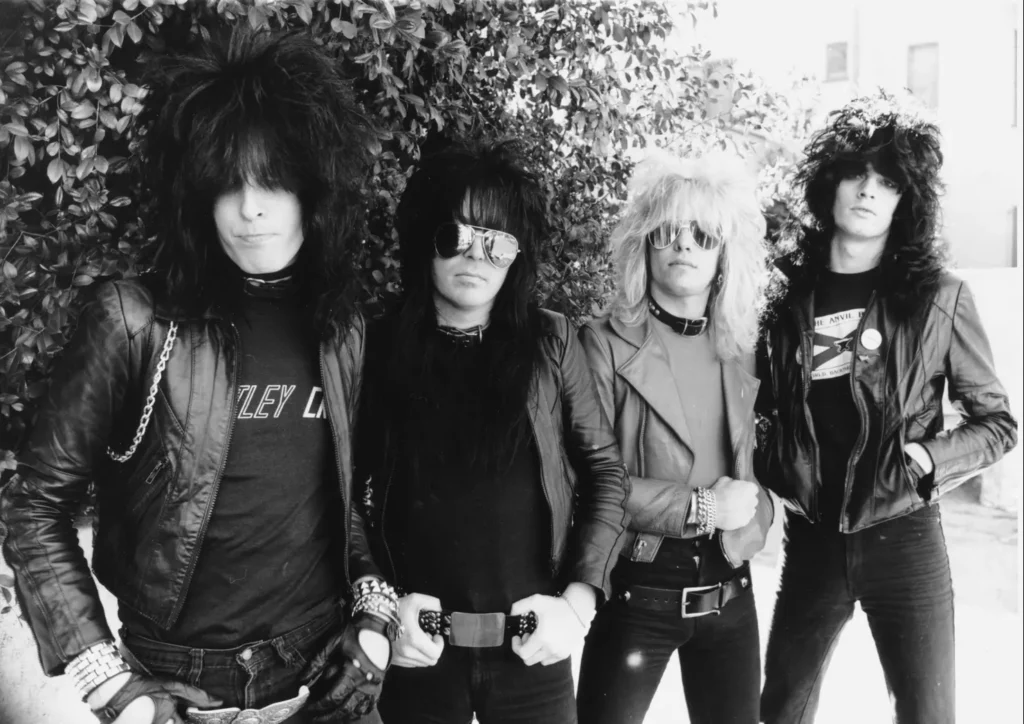
Released on November 10, 1981, the record introduced the world to one of rock’s most notorious bands and helped lay the groundwork for the glam metal explosion that would dominate the Sunset Strip throughout the 1980s. Formed earlier that year in Los Angeles, the group—vocalist Vince Neil, guitarist Mick Mars, bassist Nikki Sixx, and drummer Tommy Lee—quickly developed a reputation for their outrageous appearance, rebellious attitude, and explosive live performances. Written primarily by Sixx, the album combined the raw aggression of punk rock with the swagger of classic hard rock, drawing inspiration from bands like Aerosmith, Cheap Trick, and the New York Dolls.
Recorded at Hit City West Studios in Los Angeles with producer Michael Wagener, the original album was financed independently and released through the band’s own Leathür Records label. Its rough, unpolished production captured the energy of a young band determined to make its mark. Standout tracks included the title song, “Live Wire,” “Piece of Your Action,” “Public Enemy #1,” “Take Me to the Top,” and “On with the Show.” Following the band’s signing with Elektra Records, the album was remixed by Roy Thomas Baker and reissued in August 1982, featuring revised artwork and a modified track listing.
Although Too Fast for Love initially attracted limited mainstream attention, it quickly became a favorite among fans of Los Angeles’ emerging hard rock scene, helping Mötley Crüe build a devoted following through relentless club performances and word of mouth. The album’s combination of gritty guitar riffs, infectious hooks, and reckless attitude distinguished the group from many of its contemporaries. Early critical reaction was mixed, with some reviewers questioning the band’s musicianship and rough production, while others recognized its energy and originality. Retrospective reviews have been considerably more favorable, with many critics praising the record as one of the defining releases of early glam metal.
Commercially, Too Fast for Love eventually peaked at No. 77 on the Billboard 200, a modest showing compared with the band’s later blockbuster albums. However, its popularity continued to grow as Mötley Crüe achieved mainstream success with subsequent releases, particularly 1983’s Shout at the Devil. The debut was certified gold by the Recording Industry Association of America (RIAA) in September 1984 and platinum on July 22, 1987, recognizing one million units in the United States. Although an exact worldwide sales total as of 2026 has not been publicly verified, the album’s confirmed U.S. certification establishes its status as a million-selling release. Loudwire+2
Now celebrating its 45th anniversary in 2026, Too Fast for Love remains one of the most influential debut albums in hard rock history and a cornerstone of the 1980s glam metal movement. Its raw sound, punk-inspired energy, and unapologetically rebellious spirit helped establish the blueprint for the Sunset Strip scene that would soon produce an entire generation of commercially successful bands. Songs such as “Live Wire” and “Too Fast for Love” became enduring fan favorites, while the album’s gritty production continues to distinguish it from the more polished, arena-ready sound Mötley Crüe would embrace on later releases.
Its success also demonstrated how an independent band could build a following and attract major-label attention without sacrificing its identity. While subsequent albums such as Shout at the Devil, Theatre of Pain, Girls, Girls, Girls, and Dr. Feelgood would propel Mötley Crüe to international superstardom, Too Fast for Love remains the record that started it all. Forty-five years after its original release, the album stands as a testament to four ambitious young musicians whose combination of attitude, image, and infectious rock anthems helped reshape the sound and culture of an entire decade.