


The country music icon released a star-studded rock album in 2023
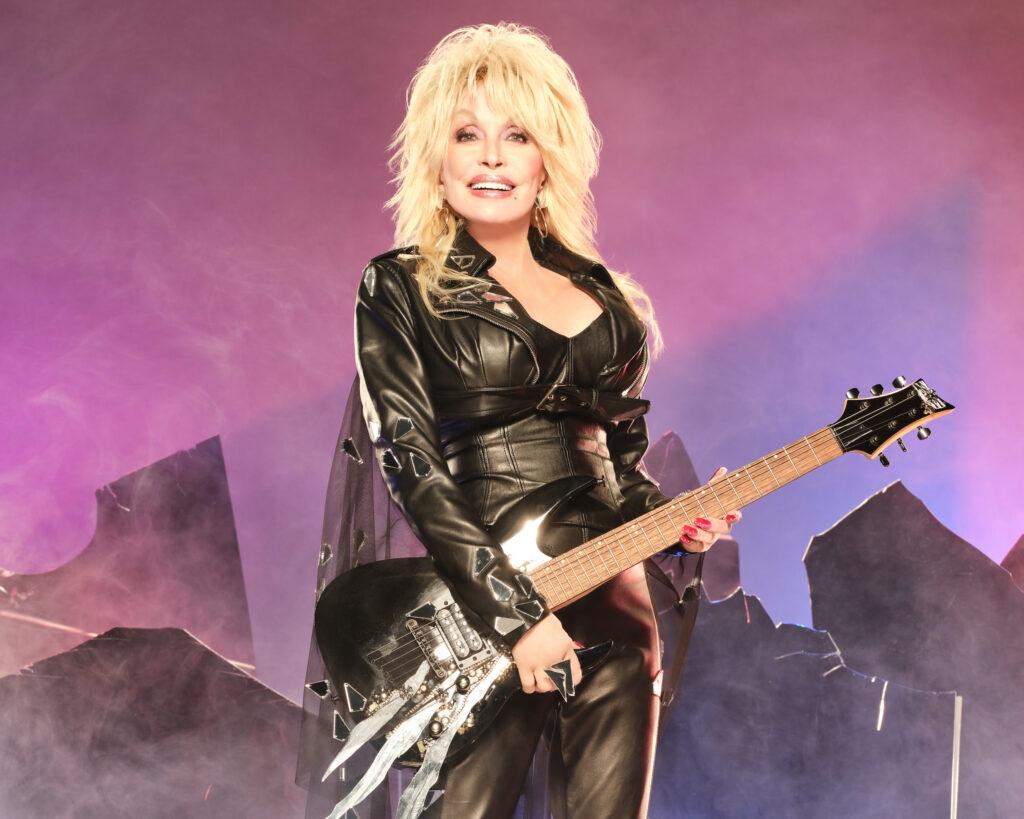
Music icon Dolly Parton has died. The news was confirmed by the singer’s nephew and head of security, Bryan Seaver, in a video statement on behalf of the family. She was 80-years old.
In 2023, Dolly released Rockstar – a huge double album featuring all rock songs. The record featured a star-studded list of guest stars including Steven Tyler (Aerosmith), Elton John, Rob Halford (Judas Priest), Nikki Sixx (Mötley Crüe), Sting, Ann Wilson (Heart), John Fogerty, Kid Rock, Stevie Nicks (Fleetwood Mac), Peter Frampton, Joan Jett, and more. The album made its way to No. 3 on the Billboard 200, and topped both Billboard’s Top Country Albums and Top Rock Albums. Three years after its release, Rockstar has been certified Gold by the RIAA.
Last year, Dolly made a very special guest appearance on a new version of Motley Crue’s 1985 hit “Home Sweet Home” to celebrate the 40th anniversary of the band’s hit album Theatre of Pain.
Dolly Parton is one of the most recognizable, successful and influential figures in American popular culture, a singer, songwriter, actress, author, businesswoman and philanthropist whose career has stretched across more than six decades. Born Dolly Rebecca Parton on January 19, 1946, in Locust Ridge, Tennessee, near the Great Smoky Mountains, she was the fourth of 12 children born to Robert Lee Parton and Avie Lee Owens Parton. The family lived in poverty, an upbringing Parton would later immortalize in songs including “Coat of Many Colors” and “My Tennessee Mountain Home.” Music was a constant presence in the household, particularly through her mother and her maternal relatives, and Parton began singing in church and writing songs while still a child. Her uncle, Bill Owens, recognized her talent and helped introduce her to the professional music business. She performed on Knoxville businessman Cas Walker’s radio and television programs as a youngster, recorded her first single, “Puppy Love,” as a teenager, and made her Grand Ole Opry debut at just 13 years old.
Parton moved to Nashville immediately after graduating from high school in 1964, determined to become a professional songwriter and recording artist. One of the first people she met there was Carl Dean, whom she married in 1966; their famously private marriage lasted nearly six decades, until Dean’s death in 2025. While Parton initially struggled to establish herself as a singer, she found early success as a songwriter, including songs written with Owens that became hits for Bill Phillips. Monument Records initially attempted to market Parton as a pop singer, but her distinctive Appalachian voice and songwriting instincts were much better suited to country music. Her breakthrough as a recording artist came with “Dumb Blonde” and her 1967 debut album, Hello, I’m Dolly, which reached the Top 20 of Billboard’s country album chart.
Parton’s career accelerated dramatically later in 1967 when Porter Wagoner invited her to join his nationally syndicated television program, The Porter Wagoner Show, replacing singer Norma Jean. Some viewers initially resisted the change, but Parton quickly became a popular member of the program. Her partnership with Wagoner transformed her into a nationally recognized country star and produced a lengthy series of duet albums and hit singles. At the same time, Parton steadily developed her solo career with songs such as “Just Because I’m a Woman,” “Joshua,” “Coat of Many Colors” and “Touch Your Woman.” Her songwriting increasingly distinguished her from many of her contemporaries. Rather than relying primarily on outside material, Parton wrote vivid songs about poverty, faith, family, relationships, heartbreak and the experiences of women, often drawing directly from her childhood in East Tennessee.
By the early 1970s, Parton had become a major country star in her own right and increasingly wanted independence from Wagoner. In 1973 she wrote and recorded “Jolene,” inspired in part by a flirtatious bank teller who had attracted Dean’s attention. The song became one of the defining recordings of her career, with its instantly recognizable guitar figure and desperate plea to a beautiful romantic rival. Around the same period, Parton decided to leave Wagoner’s organization. She expressed her feelings about their professional separation through “I Will Always Love You,” a remarkably restrained farewell song that reached No. 1 on the country chart in 1974. The song would become one of Parton’s most important compositions, returning to No. 1 in a new recording in 1982 and becoming an international phenomenon when Whitney Houston recorded it for The Bodyguard a decade later. Parton’s original “Jolene” and “I Will Always Love You” were eventually inducted into the Grammy Hall of Fame.
After leaving Wagoner, Parton set out to expand beyond Nashville without abandoning her country roots. Albums such as Jolene, Love Is Like a Butterfly, The Bargain Store and All I Can Do strengthened her reputation, while 1977’s Here You Come Again marked a major crossover breakthrough. Working with Los Angeles producer Gary Klein was controversial among country traditionalists, some of whom believed Parton was deliberately chasing the pop market, but the gamble dramatically expanded her audience. The title song reached No. 3 on the Billboard Hot 100, while the album became her first to reach the Top 20 of the Billboard 200. “Here You Come Again” also earned Parton her first Grammy Award, for Best Country Vocal Performance, Female. Rather than simply leaving country music behind, Parton demonstrated that a country artist could move between Nashville, mainstream pop and television while retaining a recognizable identity.
Her crossover success reached another level in 1980 when Parton made her feature-film acting debut alongside Jane Fonda and Lily Tomlin in 9 to 5. Parton proved to be a natural screen presence, but the movie’s enduring musical contribution was its title song, which she wrote. “9 to 5,” built around a rhythm famously resembling the clicking of typewriter keys, became a No. 1 pop and country hit and won two Grammy Awards while receiving an Academy Award nomination for Best Original Song. Parton followed her successful acting debut with films including The Best Little Whorehouse in Texas in 1982, Rhinestone with Sylvester Stallone in 1984 and, later, the 1989 ensemble favorite Steel Magnolias. Her ability to play warm, humorous and often deceptively sharp characters helped establish her as far more than a country singer.
Parton also enjoyed some of her greatest musical successes during the 1980s. Her re-recording of “I Will Always Love You” for The Best Little Whorehouse in Texas returned the song to the top of the country chart, while her 1983 duet with Kenny Rogers, “Islands in the Stream,” became one of the decade’s biggest crossover hits. Written by the Bee Gees, the song topped the Billboard Hot 100 and helped make Parton and Rogers one of country music’s most popular pairings. They subsequently recorded the holiday album Once Upon a Christmas and appeared together in television specials. Parton also joined Linda Ronstadt and Emmylou Harris for the acclaimed 1987 album Trio, a project that blended three of country and popular music’s most distinctive voices and became a major commercial and critical success.
As musical tastes changed during the late 1980s and 1990s, Parton’s presence on mainstream country radio became less dominant, but her stature as a songwriter and cultural figure continued to grow. She was inducted into the Nashville Songwriters Hall of Fame in 1986 and the national Songwriters Hall of Fame in 2001. Her 1994 autobiography, Dolly: My Life and Other Unfinished Business, became a New York Times bestseller. She also experienced an extraordinary second life for one of her compositions when Whitney Houston’s version of “I Will Always Love You” became a worldwide smash in 1992. The enormous success of Houston’s recording reminded a global pop audience that behind Parton’s glamorous image was an elite songwriter whose work could transcend genre and generation.
During the late 1990s and early 2000s, Parton made another important artistic turn by returning to acoustic country, folk and bluegrass. Albums such as The Grass Is Blue and Little Sparrow earned strong critical notices and introduced her songwriting and voice to younger roots-music audiences. Rather than becoming a nostalgia act, she continued moving among styles and generations. She later established her own Dolly Records label and released Backwoods Barbie in 2008, which at the time became her highest-charting album on the Billboard 200. Blue Smoke reached the Top 10 in 2014, while Pure & Simple topped the country album chart in 2016 and accompanied her biggest North American tour in roughly 25 years. Her enormous 2014 performance in the Legends slot at Britain’s Glastonbury Festival, before an audience estimated at around 180,000, became another defining late-career moment.
Parton’s achievements outside music have been nearly as significant. In 1986, she became a co-owner of the Silver Dollar City theme park in Pigeon Forge, Tennessee, which was renamed Dollywood. The attraction grew into one of Tennessee’s largest tourist destinations and the centerpiece of a broader entertainment and hospitality business that has provided substantial employment in the region where Parton grew up. Even more significant has been her philanthropy. In 1995 she founded Dolly Parton’s Imagination Library in honor of her father, who could not read or write. The program began by providing free books to young children in her home county and eventually expanded internationally, distributing books to children from birth to age five regardless of family income. Her charitable work has also included disaster relief, education and medical causes.
Parton’s public standing grew further in the 21st century as younger generations embraced both her music and her personality. She received the Kennedy Center Honors in 2006 and the Recording Academy’s Lifetime Achievement Award in 2011. She had already been inducted into the Country Music Hall of Fame in 1999, and in 2022 she was inducted into the Rock & Roll Hall of Fame. Parton initially expressed hesitation about the latter honor because she did not consider herself a rock artist, but she ultimately accepted the induction and responded in characteristic fashion by recording an actual rock album. Rockstar, released in 2023, featured an enormous collection of guest musicians and covers of rock standards alongside original material. The album debuted at No. 3 on the Billboard 200, giving Parton the highest-charting album of her career, and produced her biggest sales week of the modern tracking era.
Her later work has continued to emphasize family, heritage and an unwillingness to retire. In 2024 she released Dolly Parton & Family: Smoky Mountain DNA – Family, Faith and Fables, a project featuring members of her extended family and exploring the musical history of the Parton and Owens families. By 2026, as Parton celebrated her 80th birthday, her career was still active: she released a new rendition of “Light of a Clear Blue Morning,” continued developing DOLLY: A True Original Musical for Broadway, and remained involved in an expanding collection of entertainment, tourism, charitable and business ventures. Her official site estimates worldwide record sales exceeding 100 million, placing her among the best-selling female recording artists in history.
Parton’s legacy, however, rests most firmly on songwriting. She has written thousands of songs and created standards including “Jolene,” “I Will Always Love You,” “Coat of Many Colors,” “9 to 5,” “Joshua,” “The Bargain Store,” “Light of a Clear Blue Morning” and “Two Doors Down.” Her songs can be funny, sentimental, spiritual, sexually frank, devastatingly sad or socially observant, but they are typically built around direct storytelling and memorable melodies. That skill has allowed her work to survive enormous changes in the music industry. Her songs have been interpreted by artists across country, pop, rock, bluegrass, gospel and R&B, while “Jolene” and “I Will Always Love You” have become part of the broader American songbook. The Recording Academy currently credits her with 10 Grammy wins and 55 nominations, while her career encompasses dozens of major country hits and albums.
What makes Parton especially unusual is the breadth of the persona she has built without allowing that persona to eclipse her talent. The towering wigs, rhinestones, exaggerated glamour and self-deprecating jokes made her instantly recognizable, but underneath the carefully constructed image has always been a shrewd businesswoman who maintained control of much of her songwriting catalog and understood the value of her intellectual property. She turned an impoverished Appalachian childhood into material for songs rather than something to hide, and she has repeatedly reinvested her success in the region that produced her. Her combination of ambition, humor, generosity, songwriting craftsmanship and an ability to connect with audiences across cultural and generational lines has given her an exceptionally durable career. More than 60 years after arriving in Nashville, Dolly Parton stands not merely as the “Queen of Country Music,” but as one of the defining American entertainers and songwriters of the modern era.