

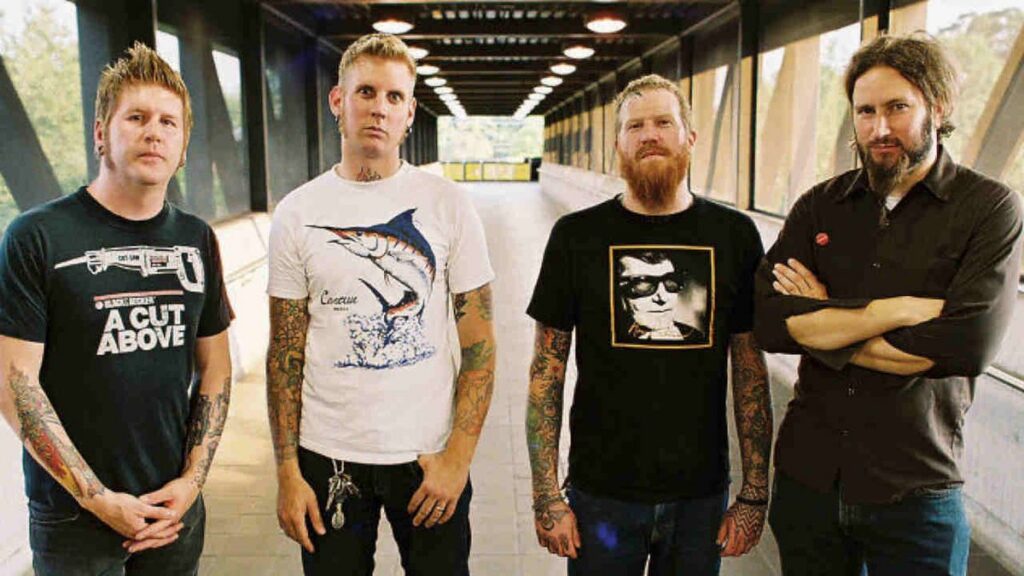
The band was faced with the seemingly impossible task of topping their previous masterpiece ‘Leviathan’
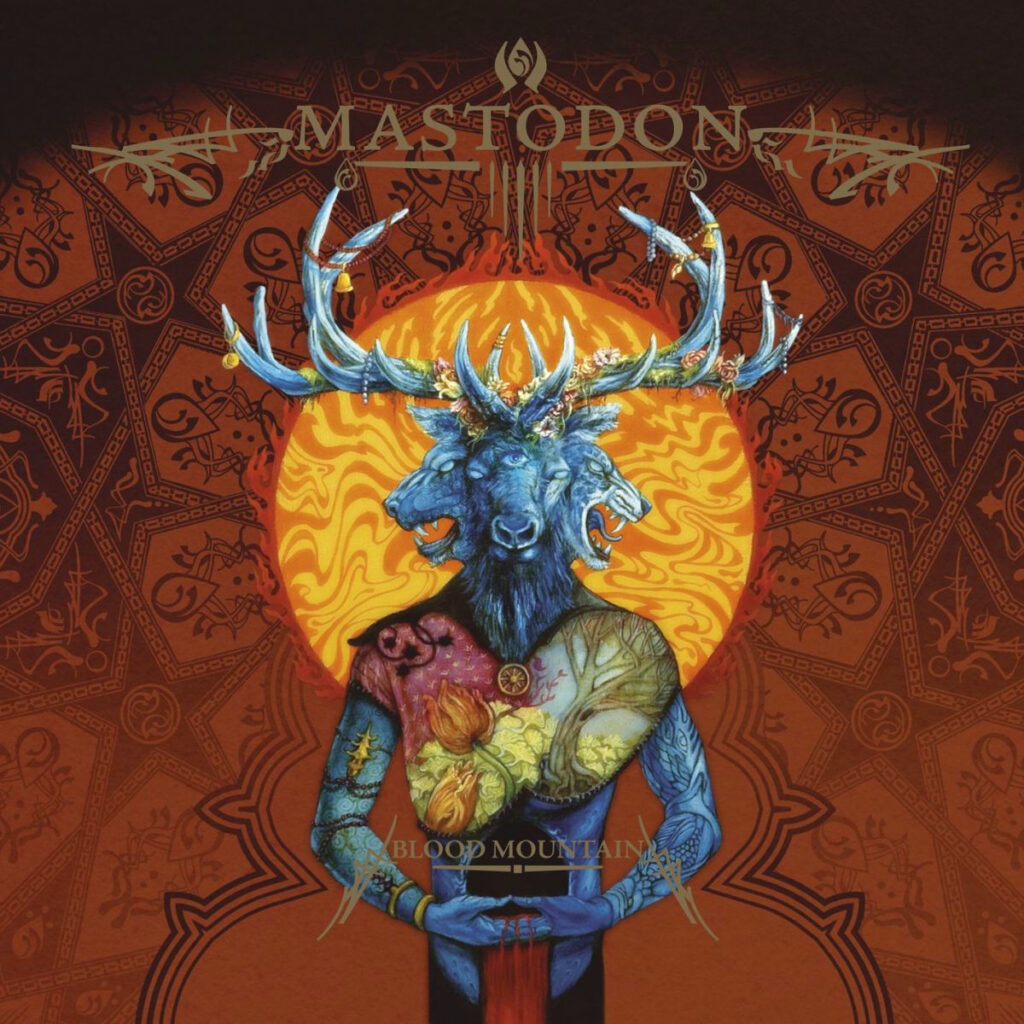
On this day 20 years ago, metal mainstays Mastodon released their third album Blood Mountain.
The record represented another major evolutionary step for the Atlanta metal band and served as its major-label debut for Reprise Records. Coming off the enormous critical success of 2004’s Leviathan, Mastodon — Troy Sanders, Brent Hinds, Bill Kelliher and Brann Dailor — resisted the temptation to simplify its music for a larger audience. Instead, the band pushed deeper into progressive metal, psychedelia and increasingly intricate songwriting. Blood Mountain was another concept album, this time built around the journey of a character attempting to climb a treacherous mountain while encountering strange creatures and obstacles in a quest for enlightenment. The album also continued the elemental themes associated with Mastodon’s early records, with Blood Mountain representing earth.
Mastodon reunited with producer Matt Bayles, who had also worked on Leviathan, recording primarily in Seattle during sessions that stretched from late 2005 into the spring of 2006. The group layered its increasingly complicated riffs, shifting time signatures and thunderous rhythms with more melodic and experimental textures, producing songs such as “The Wolf Is Loose,” “Sleeping Giant,” “Capillarian Crest” and “Colony of Birchmen.” The sessions also featured several notable guests, including Neurosis vocalist Scott Kelly on “Crystal Skull,” Queens of the Stone Age’s Josh Homme on “Colony of Birchmen,” and The Mars Volta’s Cedric Bixler-Zavala on “Siberian Divide.” Rich Costey handled the final mix, helping give the record a dense but expansive sound that pushed Mastodon beyond the sludge-metal foundations of its earlier work.
The ambitious approach was rewarded with some of the strongest reviews of Mastodon’s career. Blood Mountain earned a Metacritic score of 82 out of 100 based on 24 professional reviews, indicating “universal acclaim,” with 20 of those reviews classified as positive. Critics particularly praised Mastodon for expanding the progressive tendencies of Leviathanwithout sacrificing the aggression and heaviness that had established the group as one of metal’s most exciting new bands. Pitchfork went so far as to argue that Blood Mountain might be even better than its acclaimed predecessor, praising the increasingly refined and complicated songwriting and the dense production.
The reaction among metal fans was similarly enthusiastic, although the record’s unusual structures, cleaner vocals and psychedelic experimentation made it more challenging than conventional heavy-metal releases of the era. “Colony of Birchmen” became one of the album’s signature tracks and earned Mastodon its first Grammy Award nomination, competing for Best Metal Performance at the 2007 ceremony. More broadly, Blood Mountain demonstrated that the band could experiment with progressive rock, hardcore, sludge, psychedelic music and classic metal while still maintaining a recognizable identity, helping transform Mastodon from an underground critical favorite into one of the leading bands of its generation.
Commercially, Blood Mountain provided clear evidence that Mastodon’s growing critical reputation was translating into a substantially larger audience. The album debuted at No. 32 on the Billboard 200 after selling approximately 24,000 copies in the United States during its opening week, an enormous improvement over Leviathan, which had initially peaked at No. 139. By December 2006, Blood Mountain had reportedly surpassed 65,000 U.S. sales, and its total continued climbing as Mastodon toured extensively and gained greater exposure. Nielsen SoundScan figures later placed U.S. sales at roughly 150,000 by March 2009 and approximately 176,000 by September 2010, making it one of the band’s most commercially successful early releases.
The album ultimately served as a crucial bridge between Mastodon’s underground beginnings and the increasingly progressive direction that would culminate with 2009’s Crack the Skye. Twenty years after its release, Blood Mountain remains a pivotal entry in Mastodon’s catalog: an album that proved the band could become bigger without becoming safer, turning increasingly complicated music into a breakthrough that expanded both its audience and the possibilities of modern progressive metal.