

The band’s second effort debuted at No. 1 on the Billboard 200
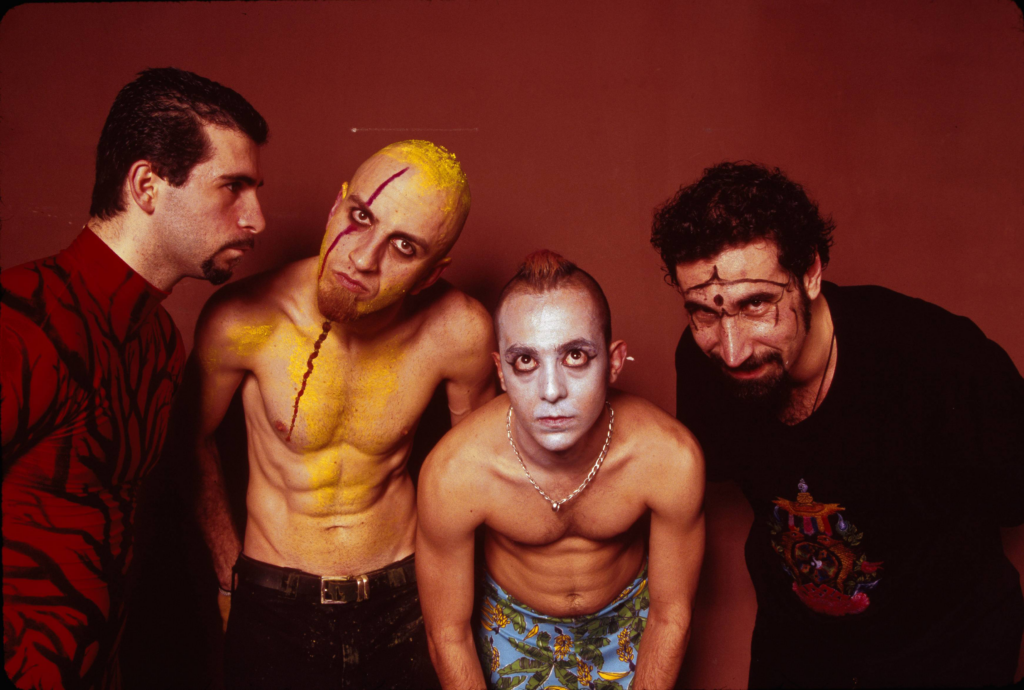
On this day 25 years ago, System of a Down released their landmark album ‘Toxicity.’
The band’s second album transformed the Armenian-American quartet from an unconventional rising metal act into one of the most important heavy bands of the early 2000s. Following years of touring behind their 1998 self-titled debut, vocalist Serj Tankian, guitarist Daron Malakian, bassist Shavo Odadjian and drummer John Dolmayan returned to their rehearsal room with a huge collection of new material. The band deliberately overwrote for the project, developing more than 30 songs before narrowing the album to 14 tracks. Working again with producer Rick Rubin, Toxicity was recorded primarily at Cello Studios in Hollywood, with Malakian taking an increasingly prominent role in songwriting and production alongside Rubin and Tankian. Malakian wanted a much larger guitar sound than the debut and extensively layered his parts, while the group expanded its musical vocabulary beyond straightforward aggression.
Songs such as “Aerials,” “ATWA” and “Chop Suey!” combined crushing riffs and frantic rhythmic changes with acoustic passages, enormous choruses and melodies influenced by Armenian and Middle Eastern music. Tankian’s theatrical vocals and politically and socially charged lyrics addressed subjects including incarceration, police brutality, environmental destruction, addiction and conformity, giving Toxicity an identity that was immediately recognizable amid the booming nu-metal scene.
The gamble paid off spectacularly. Released just one week before the September 11 terrorist attacks, Toxicity debuted at No. 1 on the Billboard 200 after selling roughly 220,000 copies during its opening week, an extraordinary achievement for a band whose music was considerably stranger and more politically confrontational than most mainstream rock. The album was propelled by “Chop Suey!,” “Toxicity” and “Aerials,” with the latter eventually reaching No. 1 on both Billboard’s Mainstream Rock and Alternative charts. “Chop Suey!” became especially significant despite being among the songs discouraged from radio airplay in the tense atmosphere following 9/11; its combination of explosive metal, haunting melody and Tankian’s unforgettable vocal performance nevertheless helped make it the band’s signature song and earned a Grammy nomination for Best Metal Performance.
Critics largely embraced the album as well. Contemporary reviews praised System of a Down for bringing unusual dynamics, melody, experimentation and genuine social commentary into a metal landscape increasingly dominated by formula, although the band’s abrupt stylistic shifts and eccentric vocals remained divisive for some reviewers. Fans responded even more enthusiastically, turning Toxicity into a multi-platinum blockbuster; the Recording Industry Association of America eventually certified it six-times platinum in the United States.
More than two decades later, Toxicity is widely regarded as System of a Down’s defining achievement and one of the essential heavy-rock albums of its era.
While the band emerged during nu metal’s commercial peak, the record has aged differently from many of its contemporaries because System of a Down never fit comfortably within that genre: punk, thrash metal, progressive rock, Armenian musical traditions, surrealist humor and politically conscious songwriting collided throughout its 44-minute running time. Songs including “Chop Suey!,” “Toxicity,” “Aerials,” “Prison Song,” “Needles” and “Deer Dance” have remained central to the band’s identity, while the album demonstrated that challenging, fiercely political heavy music could reach the very top of the mainstream charts without sacrificing its eccentricity.
Retrospective assessments have continued to recognize Toxicity as a standout of early-2000s metal, with its rapid stylistic turns, unusual vocal arrangements and mixture of fury and melody helping distinguish it from the era’s more conventional hard-rock releases. Ultimately, Toxicity did more than make System of a Down superstars—it established a sound that virtually no other band could convincingly imitate and remains the album against which the rest of their catalog, and much of 21st-century alternative metal, continues to be measured.
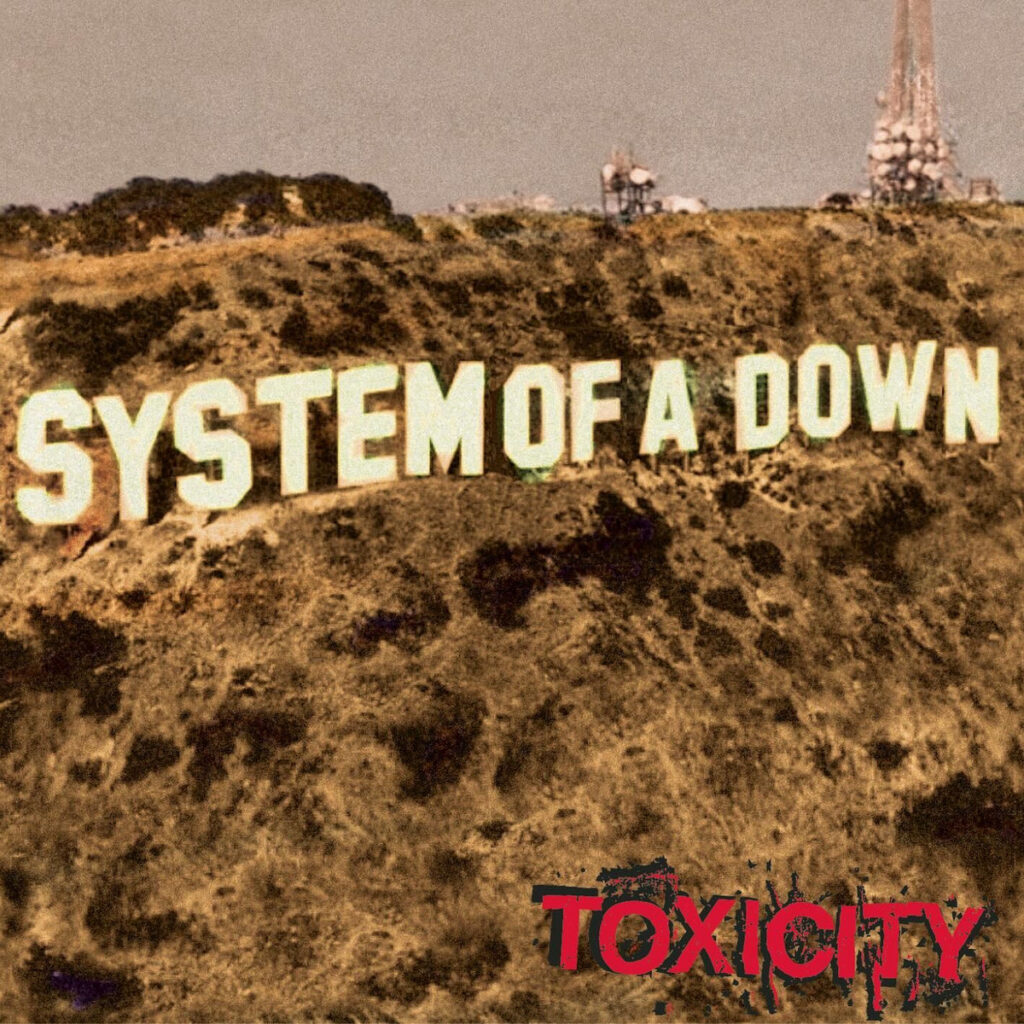
Shop the ‘Toxicity’ 25th Anniversary Collection HERE