

They are now a completely independent band
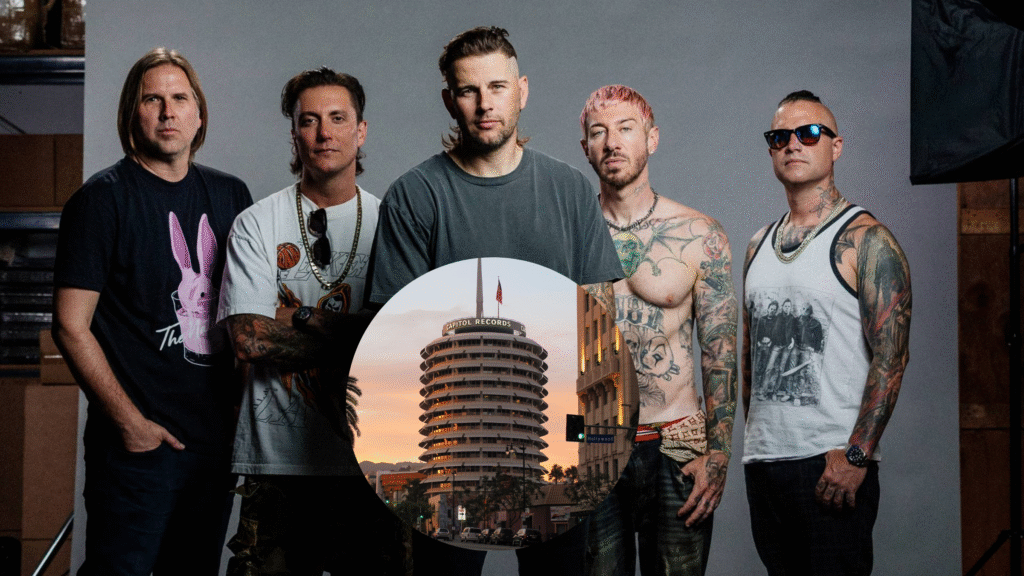
Avenged Sevenfold are now a completely independent band.
The metal titans recently acquired the master recordings and rights to their 2016 album The Stage. The group purchased them from Capitol Records, the major label that distributed the record. The band revealed the news on their official social media channels.
Now, they are an independent band. The group’s 2023 album Life Is But a Dream… was released through Warner Records, and it is their last with the label. While Warner still owns the masters to the albums that they released with the label – City of Evil (2005), Avenged Sevenfold (2007), Nightmare (2010), Hail to the King (2013), and Life Is But a Dream… (2023), the band is no longer under contract with them.
Read their full statement below on their acquisition of The Stage.
“We are excited to announce that we have purchased back the master recordings and rights to The Stage, The Stage (Deluxe Edition), and Live at the Grammy Museum from Capitol Records. We want to bring this to your attention because you may need to re-add to your playlists if it doesn’t appear on your streaming services. Also, our Deluxe Edition now includes our Live from Capitol Records Rooftop 4-song performance.
After 26 years, Avenged Sevenfold is now a fully independent band. The Stage is now a part of that independence. It’s an album that tackled AI, political and social critique, simulation theory and existentialism in 2016. All things that seem to be even more significant this day and age.
We are aware the 10 year anniversary is coming up and are looking forward to that.
You do know this is a simulation…don’t you?”
The band’s acquisition of The Stage from Capitol seems to be amicable, standard business. The road to get here, however, wasn’t a very smooth one. In 2015, Avenged Sevenfold attempted to break away from Warner Bros. Records. The dispute quickly became one of the most closely watched legal battles in the modern music industry. What initially appeared to be a contract disagreement evolved into a potentially precedent-setting fight over artist rights, long-term recording contracts, and California’s controversial “seven-year rule.” The conflict affected the release of the band’s album The Stage, threatened millions of dollars in damages, and drew attention from artists and executives across the industry.
Avenged Sevenfold had signed with Warner Bros. in 2004 after building a strong underground following through their first two albums. Under Warner, the band achieved massive commercial success with albums such as City of Evil, Avenged Sevenfold, Nightmare, and Hail to the King. By the mid-2010s, however, the relationship between the band and the label had deteriorated. According to the group and their attorney Howard King, the executives and A&R personnel who originally championed the band at Warner had largely left the company due to repeated corporate restructuring and staff turnover. Singer M. Shadows later explained that the band no longer felt connected to the label and believed the partnership had become ineffective and impersonal.
The centerpiece of the dispute involved California Labor Code Section 2855, commonly called the “seven-year rule.” The law was originally designed to prevent entertainment companies from binding artists and performers to excessively long contracts. The statute famously helped actress Olivia de Havilland break free from the old Hollywood studio system in the 1940s. However, the music industry successfully lobbied for amendments in the 1980s that allowed record labels to sue artists for damages related to undelivered albums, even if the seven-year limit had expired.
Avenged Sevenfold argued that their Warner contract had exceeded the legal seven-year limit because the deal was signed in 2004 and more than seven years had passed. Warner Bros., however, maintained that the band still owed the label additional recordings under the contract. Reports indicated that the original agreement required five studio albums and additional live releases, while the band had only delivered four qualifying studio albums to Warner at that point.
In late 2015, Avenged Sevenfold formally notified Warner Bros. that they intended to terminate the agreement under California law. Warner responded aggressively. In January 2016, the label filed a breach-of-contract lawsuit against the band, claiming that the attempt to leave the contract was unlawful and accusing the group of acting in bad faith after Warner had continued investing money into future projects and promotional plans. The label sought compensatory damages tied to the profits it believed it would lose from the undelivered album.
The stakes became enormous because the case threatened to test the modern interpretation of the seven-year rule before a jury for the first time in decades. Previous artists, including Thirty Seconds to Mars and Courtney Love, had challenged similar contract provisions, but those disputes were settled before trial. Avenged Sevenfold’s case appeared poised to become a landmark legal showdown that could reshape how major-label recording contracts were written and enforced. Industry observers noted that if the band won, many artists might attempt to escape long-term agreements using the same legal argument. If Warner prevailed, the case would reinforce the labels’ ability to demand damages for incomplete recording commitments.
Howard King publicly framed the dispute as larger than just one band. He argued that the trial would effectively become a referendum on what value major labels still provided artists in the streaming era. The band’s legal team planned to question Warner’s effectiveness in promoting rock and metal acts, particularly after the label’s internal restructuring.
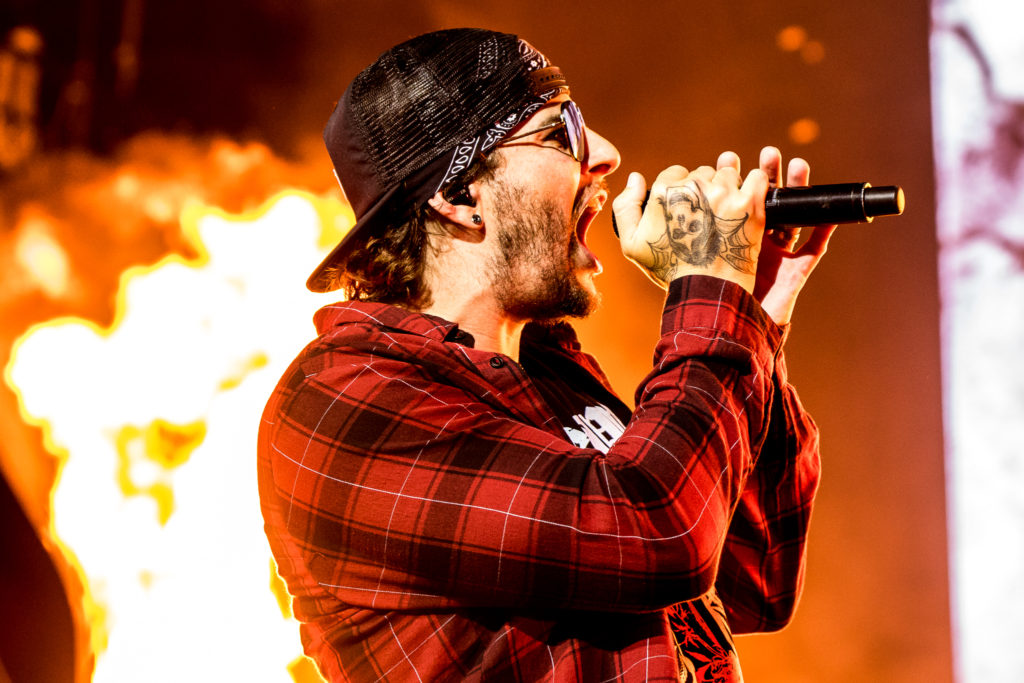
While the lawsuit was ongoing, Avenged Sevenfold made an even bolder move: signing with Capitol Records and secretly recorded their next album, The Stage. In October 2016, the band surprise-released the album through Capitol while still in active litigation with Warner Bros. The release shocked the industry because Warner claimed the band still legally owed them another album.
The Stage marked a major creative shift for the band, embracing progressive metal concepts and themes involving artificial intelligence, space exploration, and humanity’s future. The album debuted at No. 4 on the Billboard 200, though its first-week sales were significantly lower than the group’s previous two releases. Some analysts suggested the surprise-release strategy contributed to the softer commercial debut, while others viewed it as evidence of changing music-consumption habits in the streaming era.
Warner Bros. did not back down after the release. The company continued pursuing damages and prepared for trial. Reports indicated that Avenged Sevenfold could have faced between $5 million and $10 million in liability if they lost the case. The lawsuit drew widespread attention from entertainment lawyers, artists, and executives because of its potential implications for contract law throughout the music business.
The conflict also became increasingly personal. During the legal battle, Warner released the compilation The Best of 2005–2013 without the band’s approval, which many fans viewed as retaliation. Meanwhile, Avenged Sevenfold publicly defended their decision to leave, insisting that they were exercising legal rights specifically intended to protect artists from indefinite contractual control.
Eventually, however, the case never reached the industry-changing courtroom verdict many expected. The parties settled privately before trial. Exact terms were never fully disclosed, but the resolution ultimately led to an unexpected outcome: Avenged Sevenfold returned to Warner Music in the years that followed. M. Shadows later explained that the settlement discussions became tied to ownership issues involving the band’s master recordings and long-term business considerations. According to him, the group wanted greater control over their catalog and future rights, and a new agreement with Warner ultimately made financial and strategic sense.
The aftermath of the dispute reflected broader changes in the music industry. Although Avenged Sevenfold did not achieve a decisive courtroom victory, the case highlighted growing artist frustration with traditional label structures during the streaming era. It also demonstrated how major artists increasingly sought leverage over ownership, licensing, and creative control rather than simply advances and promotion. The battle became a frequently cited example in discussions about whether legacy record contracts remained fair in a radically transformed music business.
For Avenged Sevenfold themselves, the dispute marked a turning point creatively and professionally. The band emerged from the legal battle with renewed independence, a more experimental musical direction, and a stronger emphasis on controlling their own artistic identity. In later years, they would continue exploring unconventional release strategies, NFT and blockchain initiatives, and direct-to-fan engagement — all moves that reflected lessons learned during their highly public fight with Warner Bros. Records.
This summer, Avenged Sevenfold are hitting the road with Good Charlotte on a monster co-headlining tour. The jaunt is set to hit arenas and amphitheaters across North America. Check out the full tour itinerary HERE. Additionally, the groups have planned a massive gig at BMO Stadium in Los Angeles with very special guests A Day to Remember, plus more acts to be announced soon.
On this run, both bands are celebrating the 10th anniversary of their 2016 studio albums. Back in 2016, Avenged Sevenfold released The Stage, while Good Charlotte released their comeback album Youth Authority. Both bands are performing each album in full, in addition to other hits and fan favorites.
Over the last three years, Avenged Sevenfold performed extensively on their Life Is But a Dream Tour. After two successful tour legs that ran through last summer and fall, A7X decided to extend their touring itinerary into 2024. The new trek kicked off on March 6 at the KeyBank Arena in Buffalo, New York, and it will wrap up on March 31 at the Prudential Center in Newark, New Jersey. Very special guests for the trek were Poppy and Sullivan King. The band went on to headline Download Festival in the UK, Copenhell in Denmark, Graspop Metal Meeting in Belgium, Evil Live in Portugal, Nova Rock in Austria, Rock am Ring/Rock im Park in Germany, and the stacked 2024 Hellfest lineup alongside Metallica, Foo Fighters, Queens of the Stone Age, and more.
To date, Avenged Sevenfold have sold over 10 million albums worldwide and earned two consecutive No. 1 albums on Billboard’s Top 200 Albums chart (2010’s Nightmare and 2013’s Hail To The King) to go along with over a billion video views and a billion-plus Spotify streams, as well as multiple No. 1 singles on rock radio. The band are equally known for their spectacular live shows, selling out arenas and headlining the world’s most prestigious rock festivals.