

The album took the band from thrash underdogs to metal juggernauts
On this day 40 years ago, thrash metal titans released their masterpiece Peace Sells… But Who’s Buying?
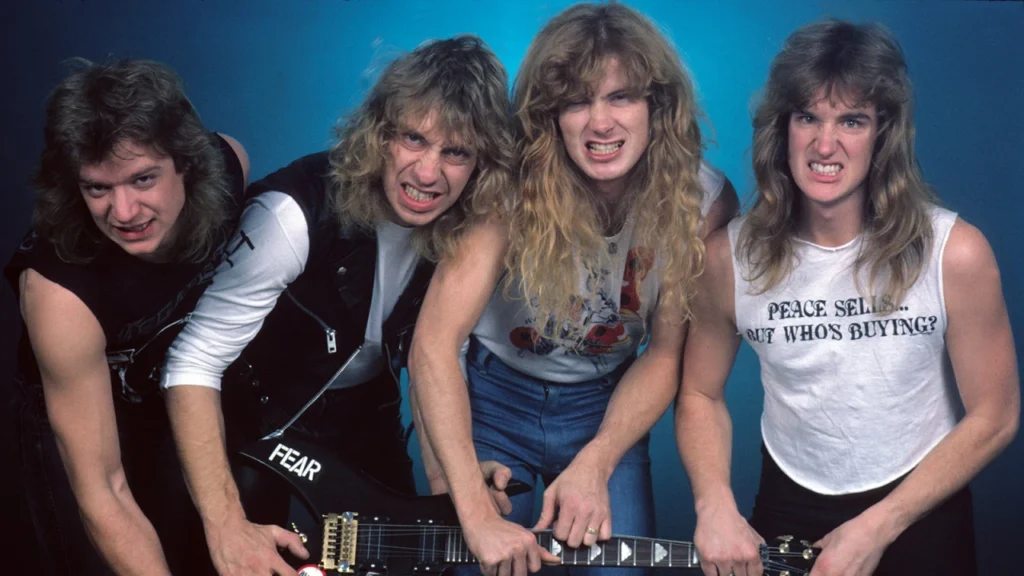
The album transformed Dave Mustaine’s young band from an underground thrash-metal threat into one of the genre’s defining forces. Following the raw aggression of 1985’s Killing Is My Business… and Business Is Good!, Mustaine entered the second album determined to create something more sophisticated without sacrificing speed or heaviness. He wrote the bulk of the material, while bassist David Ellefson, guitarist Chris Poland and drummer Gar Samuelson helped shape arrangements that incorporated elements of jazz, punk and progressive music into Megadeth’s increasingly technical thrash sound.
Recording began in Los Angeles in February 1986 with Mustaine and Randy Burns producing on a modest $25,000 budget supplied by Combat Records. The sessions were notoriously chaotic: Mustaine and Ellefson were struggling financially, while substance abuse within the band complicated the recording process. Yet the lineup’s musicianship was extraordinary, particularly the fluid lead guitar work of Poland and the jazz-influenced rhythm section of Ellefson and Samuelson. After the record was essentially completed, Capitol Records signed Megadeth, purchased the album from Combat and brought in Paul Lani to remix it before release. The result was considerably sharper and more accomplished than the band’s debut, with songs such as “Wake Up Dead,” “The Conjuring,” “Devils Island,” “Good Mourning/Black Friday” and “My Last Words” demonstrating how quickly Mustaine’s songwriting had developed.
Peace Sells… But Who’s Buying? also gave Megadeth an identity distinctly its own. Rather than concentrating solely on the violence, occult imagery and fantasy that populated much of early thrash metal, Mustaine increasingly turned his sarcasm toward politics, war, social hypocrisy and disillusionment. Nowhere was that approach more effective than on the title track, whose instantly recognizable Ellefson bass introduction became one of the most famous riffs of the thrash era. “Peace Sells” and “Wake Up Dead” received MTV exposure, helping introduce Megadeth to an audience far beyond the underground tape-trading scene, while the album earned strong critical notices for its musicianship and increasingly sophisticated compositions.
Fans responded as well: Peace Sells reached No. 76 on the Billboard 200, a significant achievement for such an abrasive style of metal in the mid-1980s, and eventually surpassed one million copies sold in the United States, earning platinum certification. The album established Megadeth as a major force alongside Metallica, Slayer and Anthrax in the emerging American thrash movement, even though this particular lineup would soon fracture; Poland and Samuelson departed after the touring cycle amid the drug problems surrounding the group.
Forty years later, Peace Sells… But Who’s Buying? remains one of the records that defined not only Megadeth but thrash metal itself. Arriving during the same extraordinary year as Metallica’s Master of Puppets and Slayer’s Reign in Blood, it helped demonstrate that extreme metal could combine speed and aggression with intricate musicianship, memorable songwriting and serious social commentary. Later critical assessments have only strengthened its reputation: the 2011 25th-anniversary edition received an 83 Metascore, while retrospective reviews have repeatedly identified it as a classic of early thrash and one of Megadeth’s essential recordings.
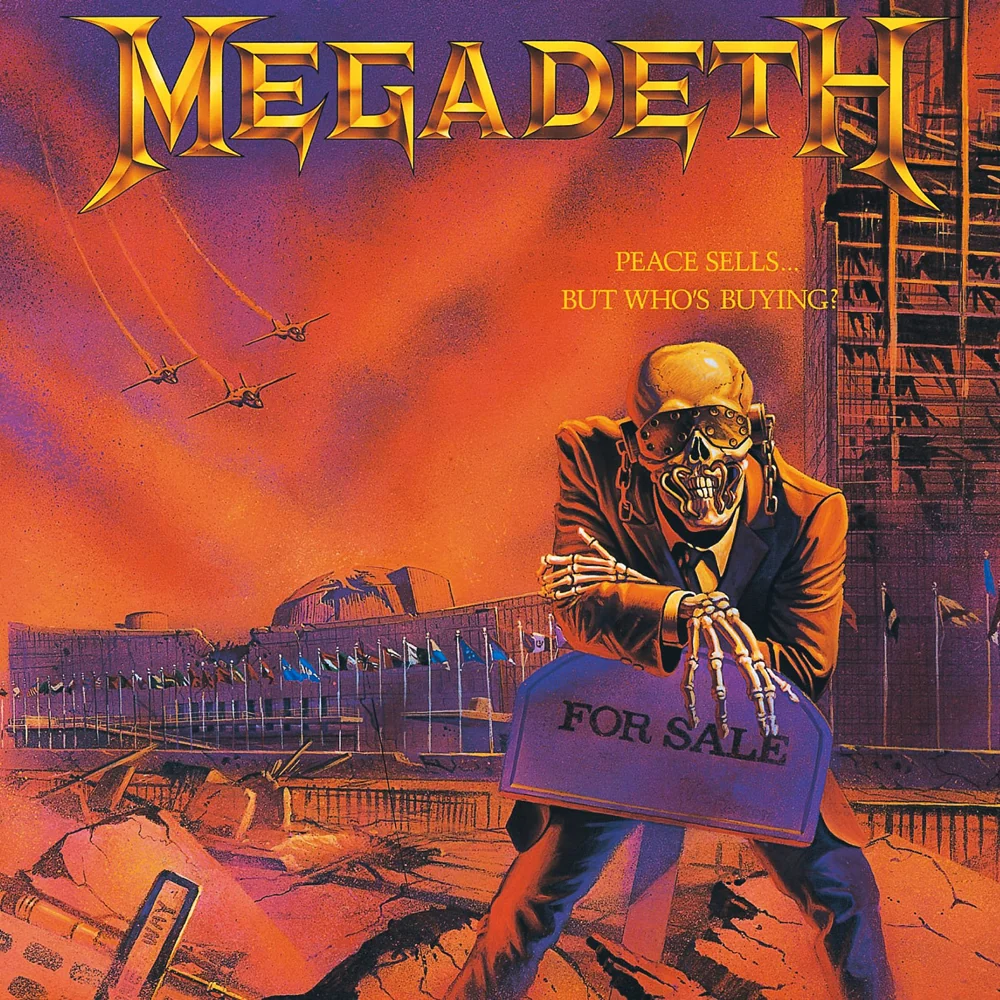
Its influence can be heard in generations of technical thrash, progressive metal and extreme-metal bands, while the title track and “Wake Up Dead” have endured as staples of Megadeth’s live repertoire. Even the Ed Repka cover—with mascot Vic Rattlehead standing amid the ruins of the United Nations—became one of heavy metal’s defining images. Four decades after its release, Peace Sells… But Who’s Buying? captures Megadeth at the moment when the volatility of its early years collided with remarkable musical ambition. The band would become more technically polished on later records such as Rust in Peace and more commercially successful with Countdown to Extinction, but Peace Sells established the combination of precision, hostility, political cynicism and unmistakable personality that became the foundation of Megadeth’s sound.