

It became the first heavy metal album to top the Billboard 200 in the new Nielsen SoundScan era
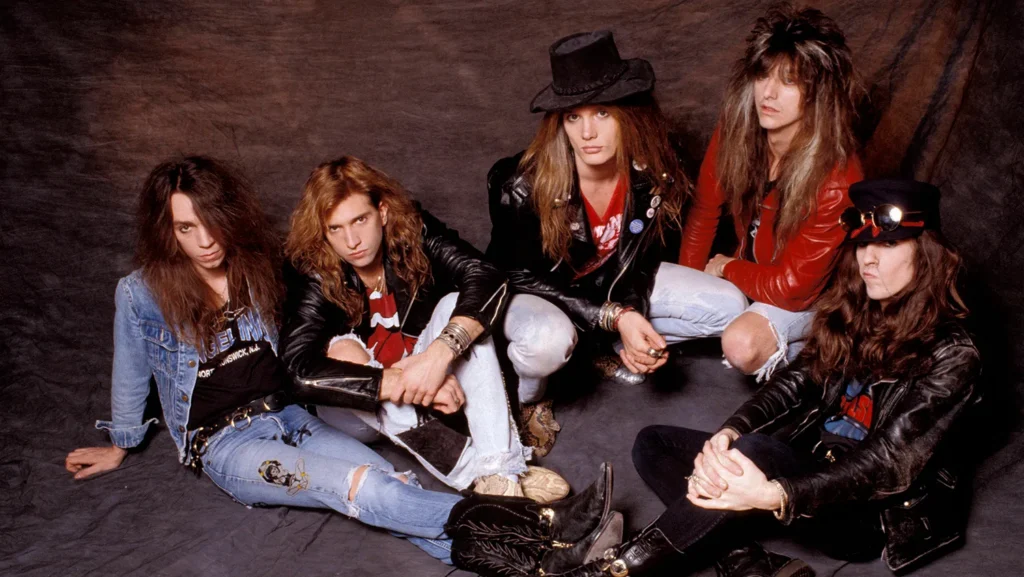
On this day 35 years ago, Skid Row unleashed their second album Slave to the Grind. The record transformed Skid Row from one of the biggest bands of the late-1980s glam-metal explosion into a legitimate heavy metal force. Arriving just over two years after the group’s blockbuster self-titled debut, the album represented a bold artistic gamble. Rather than repeating the radio-friendly formula that had produced hits such as “18 and Life,” “Youth Gone Wild,” and “I Remember You,” the band chose to make a heavier, darker, and more aggressive record. Thirty-five years later, Slave to the Grind remains widely regarded as both Skid Row’s creative peak and one of the defining hard rock and metal albums of the early 1990s.
Following the enormous success of 1989’s Skid Row, which reached No. 6 on the Billboard 200 and eventually sold more than five million copies in the United States alone, the band found itself under considerable pressure to deliver an equally successful follow-up. Instead of playing it safe, bassist and primary lyricist Rachel Bolan and guitarist Dave Sabo wrote material that reflected the heavier sound the group had been developing on stage. Much of the album was composed and demoed in New Jersey with producer Michael Wagener, who had also overseen the debut album. Recording sessions took place at New River Studios in Florida and Scream Studios in California during late 1990 and early 1991. The songs tackled more serious themes than the band’s earlier work, addressing social pressures, authority, addiction, organized religion, and personal struggles rather than the party-oriented themes commonly associated with glam metal.
The heavier direction was immediately apparent on tracks such as “Slave to the Grind,” “Monkey Business,” “The Threat,” “Riot Act,” and “Mudkicker.” The title track in particular bordered on speed metal, showcasing a level of aggression few expected from a band that had become MTV stars only two years earlier. Yet the album retained enough melody to appeal to mainstream audiences through songs such as “Quicksand Jesus,” “In a Darkened Room,” and the emotional ballad “Wasted Time.” Producer Michael Wagener later revealed that the title track was essentially captured live in rehearsal and mixed in roughly an hour, helping preserve the song’s raw energy.
When Slave to the Grind was released, it made history. The album debuted at No. 1 on the Billboard 200, becoming the first heavy metal album ever to enter the chart in the top position during the newly implemented Nielsen SoundScan era. It sold approximately 134,000 copies in its first week, a remarkable achievement for a band moving toward a heavier sound at a time when musical tastes were beginning to shift. The album produced five singles—“Monkey Business,” “Slave to the Grind,” “Wasted Time,” “In a Darkened Room,” and “Quicksand Jesus”—and quickly achieved platinum status. It would eventually be certified double platinum in the United States, with worldwide sales exceeding two million copies.
Commercially, however, Slave to the Grind occupied an interesting position within Skid Row’s catalog. While it reached a higher chart position than the debut album and achieved the historic distinction of debuting at No. 1, it ultimately sold less than half as many copies as the self-titled debut. The 1989 album’s five-million-plus U.S. sales and string of major hit singles made it one of the most successful hard rock debuts of its era. By comparison, Slave to the Grind sold roughly two million copies in America. The difference was partly due to changing musical trends; by 1991 and 1992, the rise of grunge and alternative rock was beginning to reshape the music landscape. Nevertheless, selling over two million copies while becoming substantially heavier was a remarkable accomplishment and demonstrated the loyalty of the band’s fanbase.
Critically, the album received stronger reviews than its predecessor. Many critics praised the band for refusing to chase commercial trends and instead embracing a more authentic heavy metal sound. Over time, Slave to the Grind has frequently appeared on lists of the greatest hard rock and metal albums of the early 1990s. Fans and critics alike have pointed to the album’s combination of aggression, musicianship, songwriting depth, and Sebastian Bach’s powerhouse vocal performance as evidence that Skid Row was far more than a typical hair-metal band.
The album was supported by extensive touring, including dates with Guns N’ Roses during the Use Your Illusion tour and a subsequent headlining run featuring future metal giants such as Pantera and Soundgarden as opening acts. In hindsight, those tours highlighted the band’s unique position between the fading glam-metal era and the heavier, more aggressive direction that mainstream rock would soon embrace.
Thirty-five years after its release, Slave to the Grind stands as the defining statement of Skid Row’s original lineup. While the debut album remains the band’s biggest commercial success, many fans consider the second album its artistic masterpiece. The record proved that a platinum-selling hard rock band could become heavier without sacrificing songwriting quality or commercial viability. Its influence can be heard in countless hard rock and metal acts that followed, and songs such as “Monkey Business,” “Wasted Time,” “Quicksand Jesus,” and the blistering title track remain staples of the band’s legacy. In an era when many glam-metal acts struggled to adapt, Slave to the Grind demonstrated artistic courage and remains one of the last great albums of the classic hard rock boom before the musical landscape changed forever.
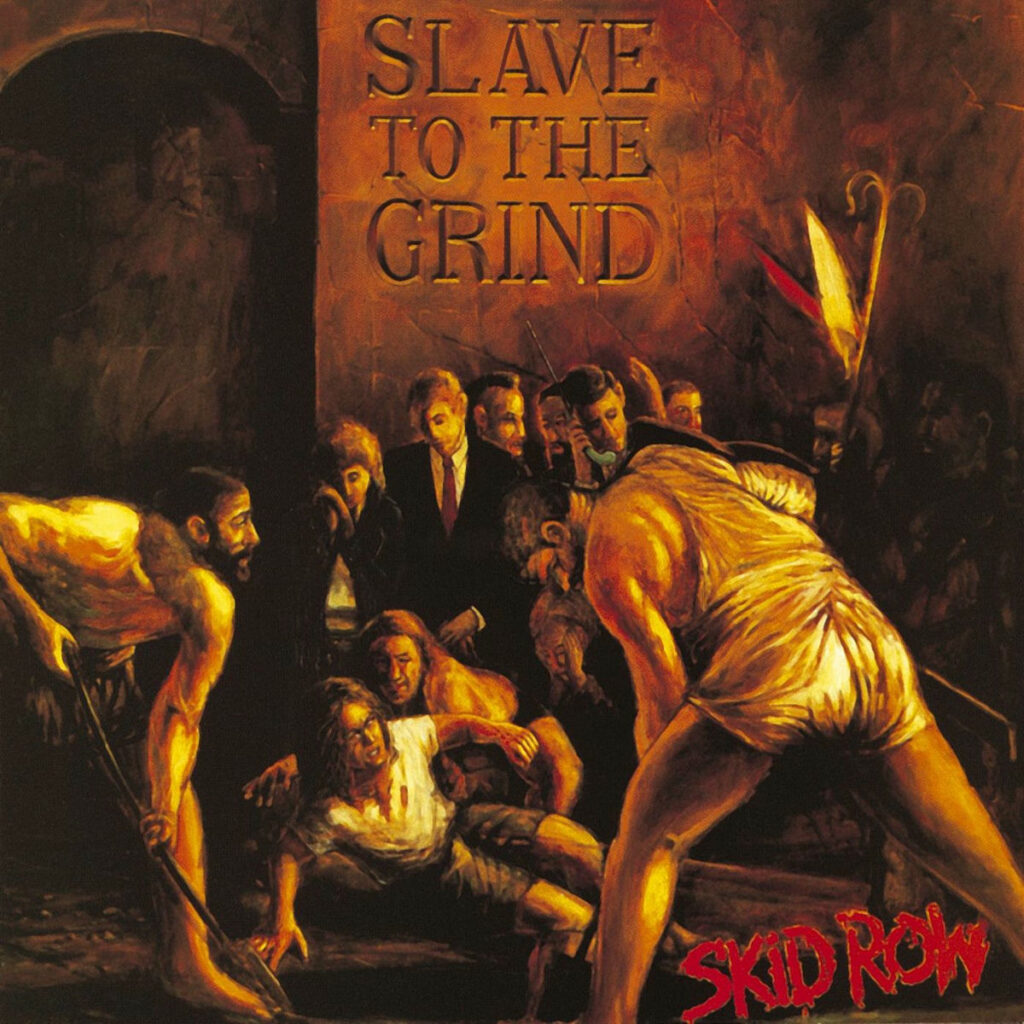
Skid Row – Slave to the Grind [Atlantic Records, 1991]
1. Monkey Business
2. Slave to the Grind
3. The Threat
4. Quicksand Jesus
5. Psycho Love
6. Beggar’s Day
7. Livin’ on a Chain Gang
8. Creepshow
9. In a Darkened Room
10. Riot Act
11. Mudkicker
12. Wasted Time
Shop on vinyl HERE