

“There’s big, then there’s bigger than big, and then there’s fucking like last night,” Noel Gallagher said
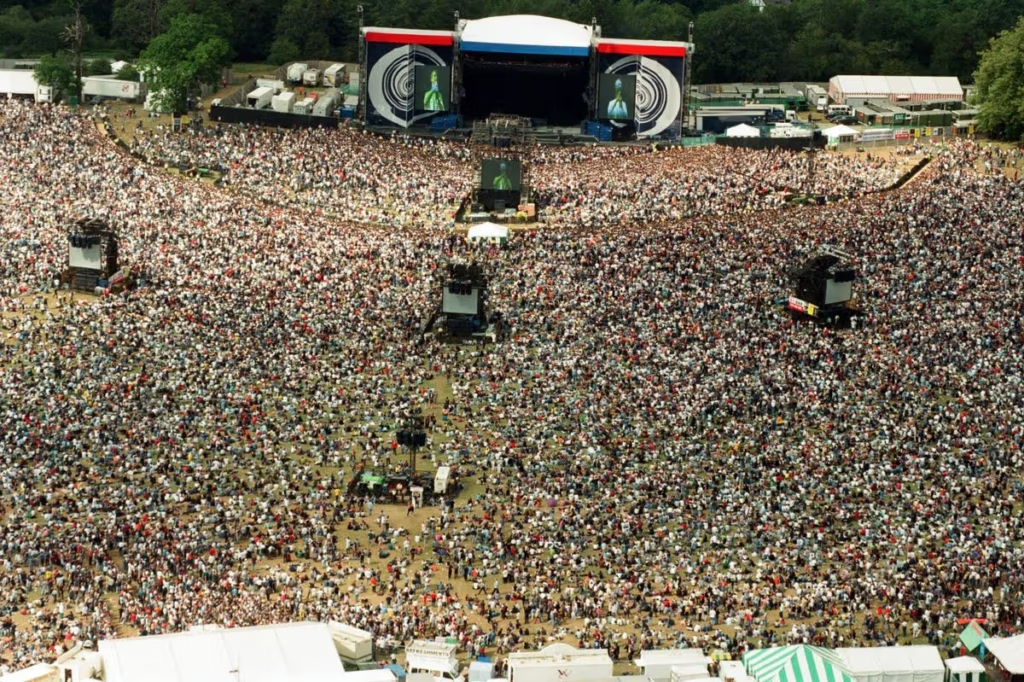
On this day 30 years ago, Oasis made history.
For two days in mid-August of 1996 Oasis transformed Knebworth House in Hertfordshire into the epicenter of British music history. Fresh off the unprecedented success of back-to-back masterpieces Definitely Maybe and (What’s the Story) Morning Glory?, Noel and Liam Gallagher had become the defining figures of the decade, and demand to see the band had reached levels previously unimaginable. The concerts were announced only months after Oasis’ triumphant pair of hometown shows at Manchester’s Maine Road, which convinced promoters that the band could headline one of Britain’s most prestigious outdoor venues. Tickets went on sale on May 11, 1996, and immediately sparked a frenzy unlike anything the UK music industry had ever witnessed. More than 2.5 million people—roughly five percent of the UK’s population at the time—applied for tickets, while all 250,000 tickets sold out in less than 24 hours. Promoters later estimated Oasis could easily have sold out Knebworth for several consecutive nights, illustrating the extraordinary cultural moment the band occupied.
The scale of the Knebworth concerts was almost beyond comprehension. Each evening welcomed approximately 125,000 fans, giving Oasis a combined audience of a quarter-million people and setting a new benchmark for the largest attendance at a UK rock concert by a single act at the time. The concerts surpassed previous attendance records set by legendary acts including Queen and Led Zeppelin at the historic venue, while the overall production established several technical milestones. The massive stage featured one of the largest video screens ever constructed for a British concert, supported by an enormous sound system designed to reach every corner of the sprawling grounds. Fans traveled from every part of Britain and dozens of other countries, with British Rail even issuing special “Oasis” train tickets to accommodate the unprecedented influx of concertgoers. The lineup surrounding Oasis was equally impressive, featuring artists such as The Prodigy, Manic Street Preachers, Ocean Colour Scene, The Chemical Brothers, Cast, The Charlatans, Kula Shaker, Dreadzone, and The Bootleg Beatles over the two days, making the weekend feel like a festival celebrating the very peak of 1990s British music.
Despite the staggering attendance, the event was remarkably well organized. More than 3,000 staff members, hundreds of security personnel, medical teams, and extensive transportation plans kept the enormous crowds moving efficiently. Tickets cost just £22.50, a figure that seems almost unimaginable today considering the caliber of performers and the historical significance of the event. Behind the scenes, the concerts were every bit as excessive as the era itself.
Creation Records reportedly maintained a backstage guest list exceeding 7,000 people, attended by celebrities including Kate Moss, Jarvis Cocker, Mick Hucknall, Anna Friel, and members of England’s Euro ’96 football squad. Meanwhile, a temporary radio station called Radio Supernova broadcast exclusively around Hertfordshire during the weekend, while lavish hospitality tents, free-flowing drinks, and all-day entertainment created an atmosphere that perfectly embodied the “Cool Britannia” spirit of the mid-1990s. Yet amid all the spectacle, the band remained focused on delivering what many still consider one of the greatest performances in British rock history. Noel Gallagher famously looked across the sea of humanity and declared, “This is history,” a statement that has only grown more accurate with time.
Several lesser-known moments have since become part of Knebworth folklore. Liam Gallagher briefly teased Blur’s “Parklife” before launching into the opening number, a jab at Oasis’ biggest Britpop rivals that was later omitted from official releases. John Squire of The Stone Roses joined the band onstage for an unforgettable rendition of “Champagne Supernova,” while the BBC’s Radio 1 broadcast had to substitute performances from the first night’s show because restrictions prevented airing certain newly recorded material from the second evening.
Noel Gallagher has also admitted that he remembers surprisingly little about walking onto the Knebworth stage due to the whirlwind pace of Oasis’ meteoric rise, a remarkable admission considering the significance of the occasion. The setlist itself was virtually flawless, featuring classics such as “Columbia,” “Acquiesce,” “Morning Glory,” “Supersonic,” “Wonderwall,” “Don’t Look Back in Anger,” “Live Forever,” “Champagne Supernova,” and a triumphant closing rendition of The Beatles’ “I Am the Walrus,” cementing the concerts as the definitive live statement of Oasis at the absolute height of their powers.
Three decades later, Knebworth remains far more than simply the biggest concerts Oasis ever played—it represents the moment when Britpop reached its absolute peak and became woven into Britain’s cultural identity. Many historians view the concerts as the defining live event of the “Cool Britannia” era, symbolizing a period of renewed national confidence in British music, fashion, art, and culture. The concerts inspired countless future musicians, demonstrated that a contemporary British rock band could command audiences on a scale previously reserved for the likes of The Rolling Stones or Queen, and continue to influence how major outdoor concerts are staged today.
Their legacy was further cemented by the acclaimed 2021 documentary Oasis Knebworth 1996, which introduced the experience to a new generation through the memories of fans who attended and restored footage from both historic nights. Even after 30 years, the Knebworth performances remain the defining image of Oasis at their peak—250,000 voices singing every word, two Gallagher brothers standing at the center of British popular culture, and a weekend that many still regard as the greatest rock concert Britain has ever seen.
Now, three decades later, Oasis are reportedly considering a return to the hallowed grounds of Knebworth where they once made history. The potential gig comes on the heels of the band’s epic return last year, which saw the band sell out stadiums around the globe. While fans wait for new tour dates to hopefully be confirmed, they will enjoy the band’s induction into the Rock and Roll Hall of Fame in November.
Get ‘Knebworth 1996’ on vinyl, CD, and DVD now HERE