


The former Stone Temple Pilots and Velvet Revolver singer passed away while on tour

On this day in 2015, the incomparable Scott Weiland died suddenly while on tour. He was just 48-years old. The legendary Stone Temple Pilots and Velvet Revolver frontman was found unresponsive on his tour bus. He was in the midst of a tour with his solo band, The Wildabouts, slated to play a show the following night [December 4] at The Wicked Moose in Rochester, New York.
Now, a decade after his untimely passing, Weiland’s estate and management group, Primary Wave, have revealed a previously unheard song called “If I Could Fly” through Virgin Music Group. It is the first unreleased piece of material from Weiland’s solo catalog to be released since his death. The song was written back in 2000 after the birth of Scott’s son, Noah.
Stream the official audio below now.
Born on October 27, 1967, Scott Weiland was one of the most distinctive and complex frontmen of the 1990s and 2000s rock landscape, known for his chameleonic vocal style, magnetic stage presence, and turbulent personal life. Born in Santa Cruz, California, and raised largely in Ohio and later Southern California, Weiland gravitated toward music early, inspired by artists like David Bowie, Jim Morrison, and the punk and glam movements that shaped his theatrical sensibilities. In 1989, after years of playing in local bands with bassist Robert DeLeo, he co-founded what would eventually become Stone Temple Pilots, a group that fused hard rock, grunge, psychedelia, and alternative influences with remarkable commercial appeal. With Weiland as the enigmatic and unpredictable frontman, Stone Temple Pilots rose to fame with their 1992 debut album Core, which included hits like “Plush,” “Sex Type Thing,” and “Creep,” earning the band a Grammy Award and establishing them as major players of the decade. Their follow-up, 1994’s Purple, further showcased Weiland’s vocal versatility—from crooning baritone warmth to snarling intensity—and produced classics such as “Interstate Love Song” and “Vasoline,” cementing the band’s identity as more than a byproduct of the grunge era.
Throughout the 1990s and early 2000s, Weiland was the creative center of Stone Temple Pilots, contributing evocative lyrics that often reflected personal struggles, emotional conflict, and surreal imagery. He evolved the band’s sound on albums like Tiny Music… Songs from the Vatican Gift Shop (1996), which flirted with glam and jazz textures, and No. 4(1999), a heavier, more aggressive return written during one of Weiland’s periods in rehab. His battles with addiction frequently interrupted the band’s momentum, but his artistry remained undeniable; his voice—equal parts vulnerability and raw power—became one of the most recognizable in modern rock. After splitting with STP in the early 2000s, Weiland would reunite with them twice, eventually recording the band’s 2010 self-titled album, which showed flashes of the melodic instincts that had defined their best work.
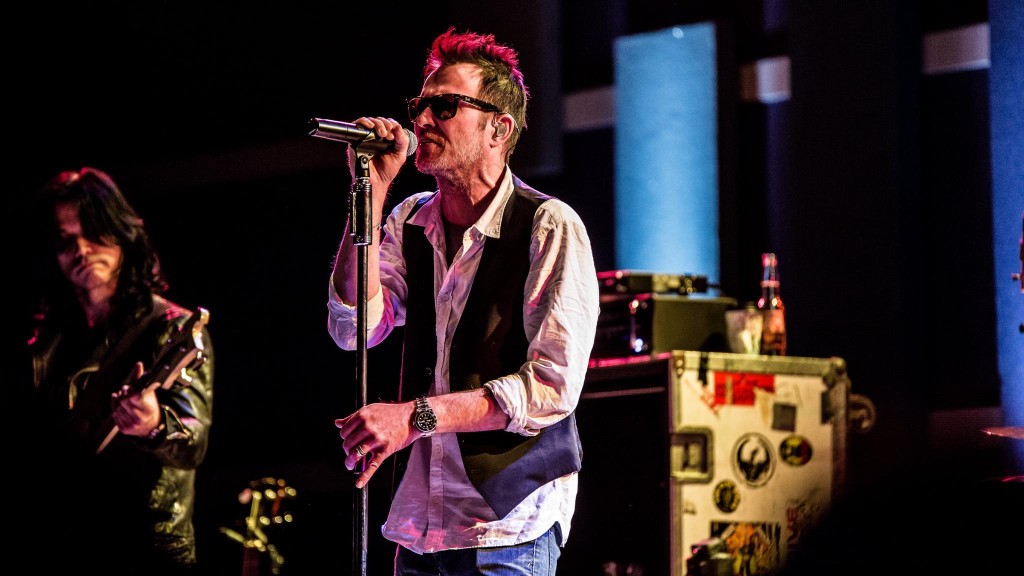
During his first major hiatus from Stone Temple Pilots, Weiland joined forces with members of Guns N’ Roses—Slash, Duff McKagan, and Matt Sorum—along with guitarist Dave Kushner to form Velvet Revolver. As the supergroup’s lead vocalist and lyricist, Weiland brought a gritty swagger and emotional weight that helped shape their debut album Contraband (2004). Songs like “Slither” and “Fall to Pieces” highlighted both his dynamic range and his chemistry with the band, with Contraband debuting at No. 1 on the Billboard 200 and earning Velvet Revolver a Grammy Award. Their second album, Libertad (2007), showcased more experimentation and melodic focus, but increasing tensions and Weiland’s ongoing addiction issues led to his departure in 2008. Still, his work with Velvet Revolver remains a significant chapter in his career, demonstrating his ability to reinvent himself beyond the STP sound while maintaining his identity as a commanding rock frontman.
Alongside his band projects, Weiland pursued a varied and eclectic solo career. His debut solo album, 12 Bar Blues(1998), ventured into electronic, experimental, and glam-inspired territories, revealing influences from Bowie to trip-hop and reflecting his desire to step outside the confines of mainstream rock. Though not a major commercial success, it gained a cult following for its ambitious, avant-garde approach. His 2008 album Happy in Galoshes continued this exploratory spirit, blending alternative rock with orchestral touches and introspective lyrics. Weiland also recorded The Most Wonderful Time of the Year (2011), an unconventional holiday album that showcased his crooner instincts and fondness for retro styles, further underlining the breadth of his musical identity. In the 2010s, he formed Scott Weiland & The Wildabouts, releasing the album Blaster in 2015, which returned to gritty rock but was overshadowed by mounting personal struggles.
Scott Weiland’s life was marked by extraordinary creativity intertwined with years of addiction, legal troubles, and personal upheaval, all of which shaped the mythology surrounding him. Despite these challenges, his impact on alternative and hard rock remains immense: he helped define the sound of a generation with Stone Temple Pilots, revitalized classic rock energy with Velvet Revolver, and pushed boundaries in his solo work. His sudden death on December 3, 2015, brought to a close a career filled with reinvention, triumph, and tragedy, but his legacy lives on in the countless artists influenced by his vocal style, his fearless genre-blending, and his vulnerable, often haunting songwriting.