

The Grammy-winning LP brought Metallica to the mainstream masses
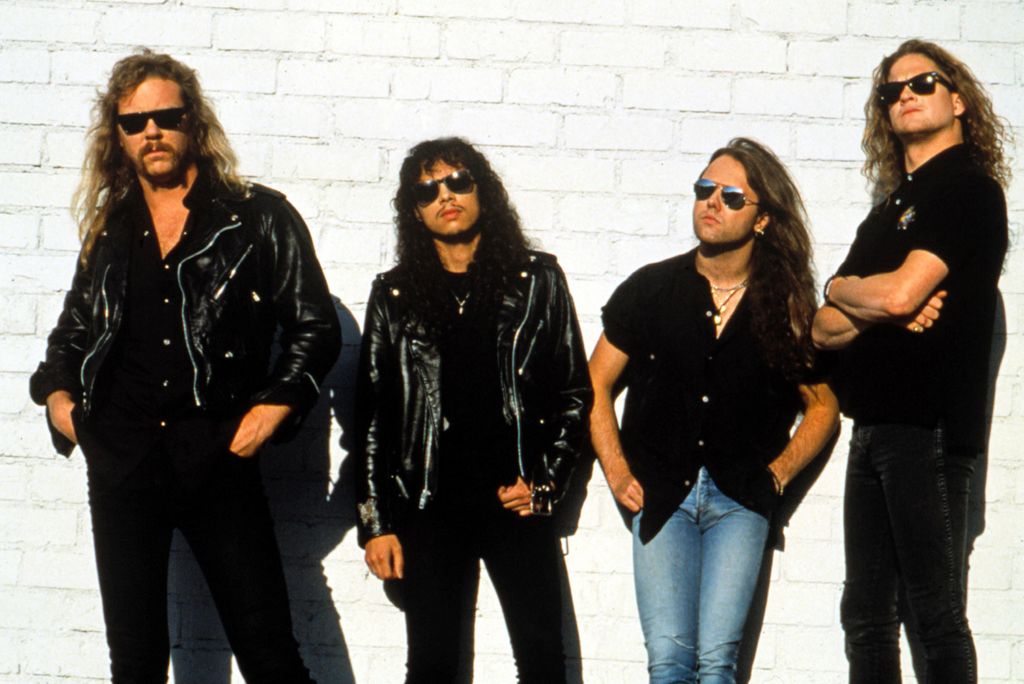
On this day 35 years ago, Metallica released their eponymous fifth album – ‘The Black Album.’
The Black Album was one of the boldest transformations ever undertaken by a major heavy metal band. Following the intricate arrangements, progressive tendencies and relentless thrash of 1988’s ‘…And Justice for All,’ Metallica deliberately sought to make shorter, more direct songs built around massive riffs and memorable hooks. Working for the first time with producer Bob Rock, who had been impressed by the band’s sound on “Harvester of Sorrow” but believed their records had never fully captured the power of their live performances, Metallica spent roughly eight months recording at One on One Recording Studios in Los Angeles.
The sessions were notoriously demanding and often contentious, with Rock pushing James Hetfield, Lars Ulrich, Kirk Hammett and Jason Newsted harder than they were accustomed to being pushed in the studio. Rather than constructing long, complicated thrash epics, the band emphasized groove, dynamics and enormous production, with Hetfield developing into a more melodic and personal vocalist and songwriter. Songs such as “Enter Sandman,” “Sad but True” and “Wherever I May Roam” retained Metallica’s crushing heaviness while slowing the tempos and simplifying the structures, while “The Unforgiven” and especially “Nothing Else Matters” revealed a vulnerability rarely heard from the group before. The result was less a rejection of heavy metal than a reinvention of Metallica’s version of it: slower, tighter, more accessible and built to sound absolutely colossal.
The stylistic shift initially divided Metallica’s audience, particularly longtime listeners who had followed the band from the underground thrash-metal scene of the 1980s. Some accused the group of “selling out,” arguing that the streamlined songwriting, polished production, music videos and radio-friendly singles sacrificed the complexity and aggression that had defined albums such as ‘Ride the Lightning,’ ‘Master of Puppets’ and ‘…And Justice for All.’ Yet the critical response was overwhelmingly positive, and an enormous new audience embraced the record almost immediately.
Kirk Hammett recalled noticing bored-looking faces in the crowd during the more sprawling material, helping convince Metallica that it was time to simplify its approach. That philosophy was present from the beginning of the new record: “Enter Sandman” was the first song Metallica developed when writing began in July 1990, built around Hammett’s memorable riff and deliberately shaped into something shorter, more direct and groove-oriented than much of the band’s Eighties work. James Hetfield’s original lyrics, however, were considerably darker than the finished song. He initially envisioned “Enter Sandman” as a story involving the sudden death of an infant, but producer Bob Rock encouraged him to make the lyrics less literal and more open-ended, ultimately helping transform the track into the nightmare-themed anthem that became the album’s first single and one of Metallica’s signature songs.
Rock himself was an unusual choice to produce Metallica. His résumé included commercially successful records by Mötley Crüe, Bon Jovi, The Cult and Loverboy—acts far removed from Metallica’s thrash-metal roots—but the band was less interested in those artists’ musical styles than in the enormous, powerful sound Rock had captured on their records. His influence extended to the guitars as well. While Metallica had traditionally relied heavily on standard E tuning, The Black Album became the first of their records to employ three different guitar tunings: most of the album remained in E standard, while “Sad but True” was lowered to D standard and “The God That Failed” used E-flat. Rock’s suggestion to tune “Sad but True” down helped give its already massive central riff an even heavier character. The recording process also represented another significant change: for the first time, Metallica tracked the basic performances with the musicians playing together in the studio. Rather than Lars Ulrich and Hetfield constructing the rhythmic foundation separately before Kirk Hammett and Jason Newsted added their parts, the musicians performed as a unit, allowing them to see and respond to one another and giving the recordings more of the energy of a live Metallica performance.
Another major development involved Hetfield’s voice. While he had built his reputation around an aggressive bark and roar, The Black Album pushed him toward becoming a more versatile singer. His performances on “The Unforgiven” and “Nothing Else Matters” were partly inspired by Chris Isaak, whose atmospheric hit “Wicked Game” caught Hetfield’s attention. Hetfield approached Rock wanting to learn how to actually sing with the sort of nuance he heard in Isaak’s voice rather than simply relying on doubled, shouted vocals.
Rock encouraged him to concentrate on delivering a genuine vocal performance, helping reveal the melodic side of Hetfield’s voice that would become increasingly important to Metallica’s music. At the same time, the album’s dark, introspective atmosphere reflected considerable turmoil within the group: Ulrich, Hammett and Newsted were all going through divorces while the record was being made. Hammett later explained that he attempted to channel feelings of guilt, failure and emotional upheaval into the music, something he believed contributed significantly to the album’s brooding character.
Perhaps the greatest departure was “Nothing Else Matters,” a song Hetfield initially wrote privately while talking on the phone with his then-girlfriend. After Ulrich heard Hetfield’s demo, he persuaded him that the deeply personal ballad belonged on a Metallica album. Interestingly, although Hammett appears in the song’s music video and performs it live, he did not actually play guitar on the studio recording. Hetfield performed both the distinctive acoustic introduction and the blues-influenced guitar solo himself, making the song one of the rare Metallica recordings without Hammett’s guitar playing. Hetfield was also extremely nervous about how longtime fans would react to such a vulnerable song.
When Metallica premiered the album for roughly 10,000 fans at a free Madison Square Garden listening party on August 3, 1991, he reportedly worried that the audience might reject “Nothing Else Matters” outright. Instead, the crowd responded positively, foreshadowing the song’s eventual status as one of Metallica’s most beloved compositions. Taken together, these lesser-known stories illustrate just how many risks Metallica took while creating The Black Album: simplifying their songwriting, embracing different tunings and recording methods, allowing an outside producer to challenge them, expanding Hetfield’s vocal range and venturing into emotional territory that would have seemed almost unimaginable on their earlier thrash records.
‘Metallica’ debuted at No. 1 on the Billboard 200 and turned a band that had already become one of metal’s biggest attractions into genuine global superstars. “Enter Sandman” became one of the defining rock songs of the decade, while “The Unforgiven,” “Nothing Else Matters,” “Wherever I May Roam” and “Sad but True” became enduring staples of rock radio and Metallica’s live performances. The album also won the Grammy Award for Best Metal Performance and fueled an enormous touring cycle that approached 300 concerts over roughly three years. Its commercial longevity proved even more remarkable than its initial success: Metallica now lists worldwide sales at more than 35 million copies, making The Black Album one of the best-selling albums in history. Rather than merely bringing Metallica into the mainstream, the record demonstrated that uncompromisingly heavy guitars, dark subject matter and arena-sized metal could coexist with pop-level commercial success.
Thirty-five years later, ‘The Black Album’ remains the pivotal record in Metallica’s career and one of the most consequential heavy metal albums ever released. Its stripped-down approach helped alter the vocabulary of mainstream metal in the 1990s: instead of relying on speed or technical complexity to create heaviness, Metallica demonstrated the enormous impact of space, groove, precision and simple riffs delivered with overwhelming weight. Its production—particularly Hetfield’s layered rhythm guitars, Ulrich’s thunderous drums and the far more audible low end—became a benchmark for generations of hard-rock and metal records, while songs such as “Enter Sandman” and “Nothing Else Matters” transcended the genre altogether. Its influence can also be measured by its extraordinary longevity; Metallica has described it as the best-selling album of the past three decades and one of the extraordinarily rare albums to spend more than 550 weeks on the Billboard 200, while the 2021 ‘Metallica Blacklist’ project featured more than 50 artists from wildly different genres interpreting its songs. What seemed controversial in 1991 ultimately became one of rock history’s great crossover moments.
‘The Black Album’ did not simply make Metallica the biggest metal band in the world—it expanded the potential audience for heavy music, established a collection of songs that remain central to the band’s identity, and created a sonic blueprint whose influence is still unmistakable 35 years after its release.
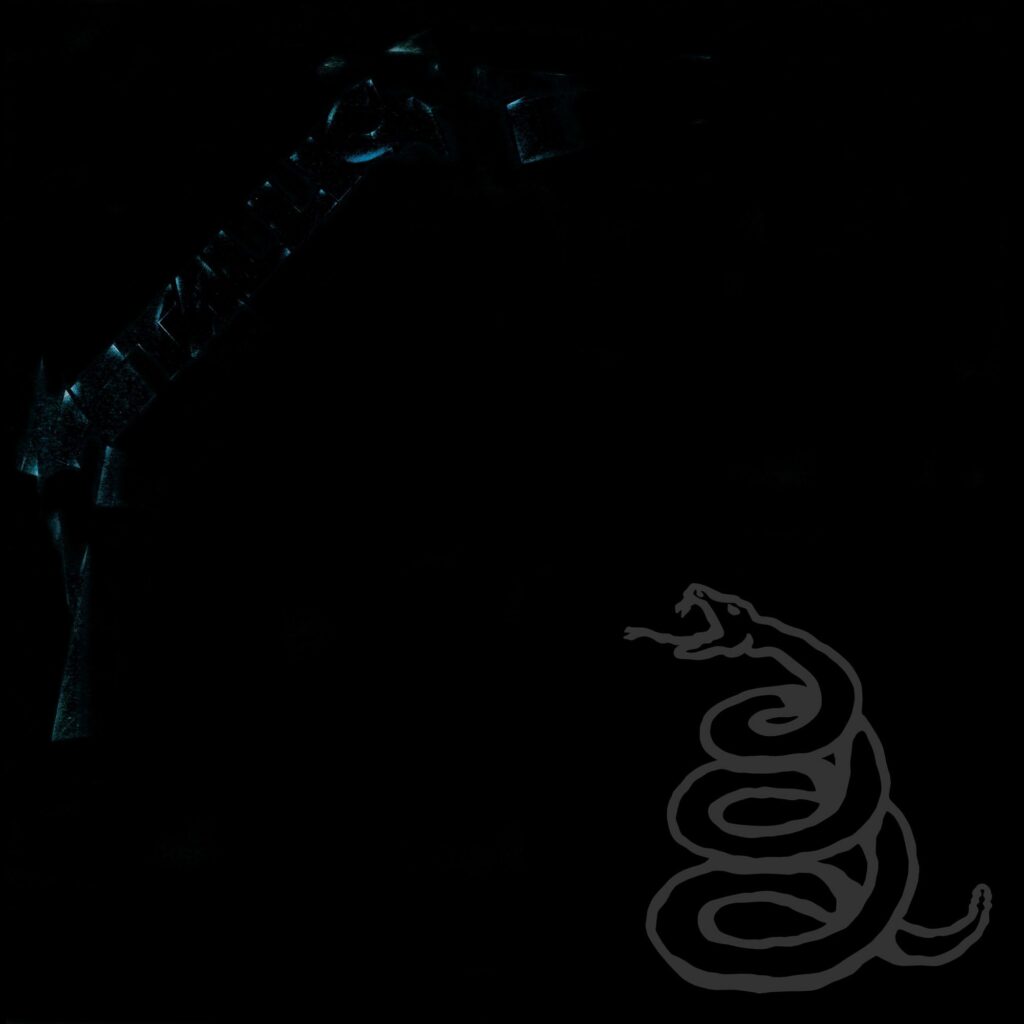
Shop ‘The Black Album’ collection HERE