


His legacy and influence are felt every day four decades later
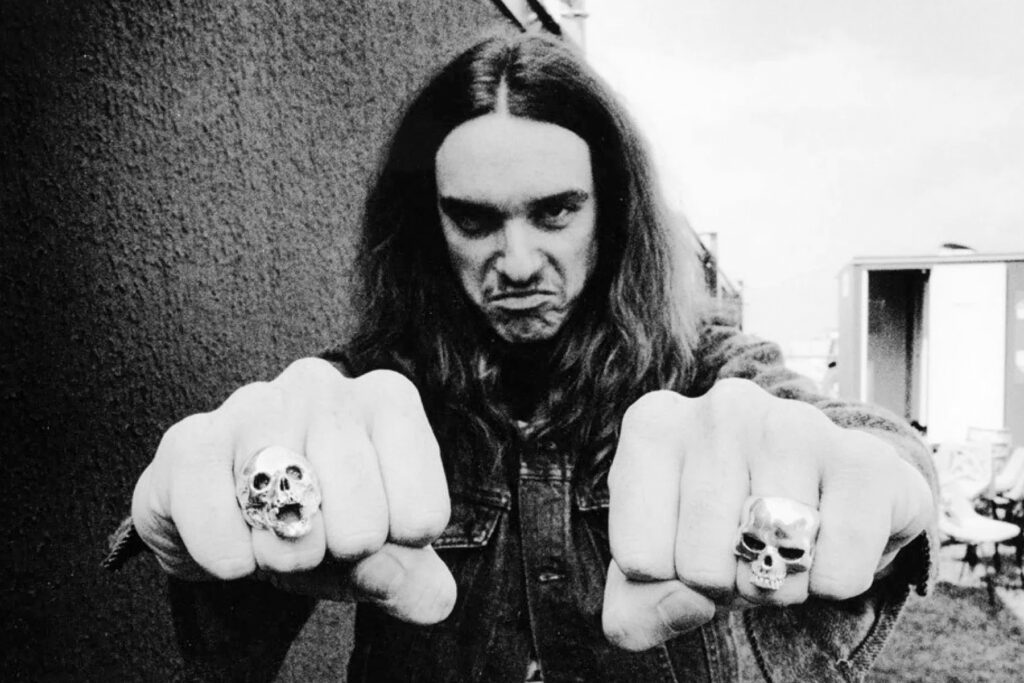
Forty years ago today, on September 27, 1986, heavy metal lost one of its most gifted, original and influential musicians when Metallica bassist Cliff Burton was killed in a tour bus accident in Sweden. He was only 24 years old. Burton had spent less than four years in Metallica and appeared on just three of the band’s studio albums, yet that remarkably short period was enough to permanently change both Metallica and the role of the bass guitar in heavy music. He was more than the foundation underneath James Hetfield’s riffs, Kirk Hammett’s leads and Lars Ulrich’s drums. Burton was a composer, musical theorist, fearless improviser and sonic experimenter whose understanding of classical music and appreciation for everything from punk to progressive rock helped Metallica evolve from a ferocious young thrash band into musicians capable of creating lengthy, sophisticated compositions. Four decades after his death, Burton remains inseparable from the mythology of Metallica, while recordings such as “(Anesthesia) — Pulling Teeth,” “For Whom the Bell Tolls” and “Orion” continue to inspire bassists who weren’t even born during his lifetime. Metallica itself has described his influence on the band’s musical development as “enormous.”
Clifford Lee Burton was born February 10, 1962, in Castro Valley, California, and developed an intense devotion to music while still young. Unlike many rock bassists who approached the instrument primarily as a supporting component of a rhythm section, Burton studied it as a vehicle for melody, harmony and individual expression. His musical interests were unusually broad. Black Sabbath and Geezer Butler were important influences, but Burton also absorbed the work of Rush, Thin Lizzy, Motörhead, Blue Öyster Cult and virtuoso players such as Stanley Clarke. At the same time, he developed a fascination with classical music—particularly Johann Sebastian Bach—and loved punk acts such as the Misfits. That combination would become crucial to his identity. Burton could bring the aggression and attitude of punk into the same musical vocabulary as classical harmony, progressive-rock ambition and the sheer weight of heavy metal.
Before Metallica, Burton played in several Bay Area groups, including EZ-Street, Agents of Misfortune and Trauma. His work with EZ-Street connected him with future Faith No More guitarist Jim Martin, while Trauma provided the platform that ultimately changed his life. James Hetfield and Lars Ulrich saw Burton performing with Trauma in Los Angeles in 1982 and were stunned by what they initially thought was the sound of a guitar. Burton was using distortion and effects while playing an extended solo on bass, effectively treating the instrument like a lead guitar. Metallica was looking to replace original bassist Ron McGovney, and Hetfield and Ulrich wanted Burton. He eventually agreed to join, but with an important condition: Metallica would have to relocate from Los Angeles to the San Francisco Bay Area. They did, and Burton officially became part of a lineup that would soon include Hetfield, Ulrich and, after Dave Mustaine’s departure in 1983, lead guitarist Kirk Hammett.
Burton immediately established that he would not be an anonymous bassist standing behind the guitars. Metallica’s 1983 debut, Kill ‘Em All, contained one of the most audacious statements a young metal bassist could have made: “(Anesthesia) — Pulling Teeth.” Essentially a bass solo turned into an album track, the piece employed distortion, wah and Burton’s highly aggressive fingerstyle technique to create sounds that listeners could easily mistake for an electric guitar. Its mixture of classical ideas, heavy-metal aggression and improvisational freedom announced Burton as something different. At a time when the bass in many metal recordings was largely expected to reinforce guitar riffs, Burton made his instrument a distinct voice. James Hetfield later remembered that Burton constantly ventured high up the neck and refused to confine himself to a conventional supporting role. Rather than restraining him, Metallica allowed him to find his own place within the band’s increasingly complex music.
If Kill ‘Em All demonstrated Burton’s abilities as a player, 1984’s Ride the Lightning showed just how important he could be to Metallica as a musician and composer. The album represented an enormous artistic leap from the straightforward speed and aggression of the debut, incorporating acoustic passages, changing tempos, more sophisticated harmonies and longer song structures. Burton’s musical knowledge became an important part of that growth. His presence can be heard dramatically in “For Whom the Bell Tolls,” whose famous opening passage sounds almost like an unusually distorted guitar but is driven by Burton’s bass. His playing also contributes to the atmosphere and complexity of the instrumental “The Call of Ktulu.” The album as a whole demonstrated that thrash metal didn’t have to consist solely of speed. Metallica could be crushingly heavy one moment and melodic, atmospheric or almost cinematic the next. Burton helped give the band the vocabulary to make those transitions convincing.
That ability to expand Metallica’s musical boundaries is one of the reasons Burton can accurately be described as an anchor for the band without suggesting that he simply held down the low end. He anchored Metallica intellectually as much as rhythmically. His knowledge of harmony and theory complemented Hetfield’s extraordinary instinct for riffs and song construction, Ulrich’s sense of arrangement and Hammett’s lead playing. Burton encouraged experimentation rather than simplicity for its own sake. Metallica’s official history has specifically credited his combination of a do-it-yourself willingness to jam and experiment with a strong understanding of musical theory as a major influence on the group’s development. Burton could lock into Hetfield’s rhythm guitar and make Metallica sound enormous, but he could also move independently from it, supplying countermelodies, fills, harmonies and textures.
Everything Burton brought to Metallica reached its fullest expression on 1986’s Master of Puppets. Recorded at Sweet Silence Studios in Copenhagen with producer Flemming Rasmussen, the album took the ambition of Ride the Lightningeven further. Songs such as “Battery,” “Master of Puppets,” “Welcome Home (Sanitarium),” “Disposable Heroes” and “Damage, Inc.” combined thrash-metal violence with increasingly elaborate arrangements, while Burton’s musical personality was woven deeply into the record. The eerie opening of “Damage, Inc.” featured layered bass sounds with a classical sensibility, and Burton’s love of Bach was part of the musical thinking behind the passage. Kirk Hammett has recalled Burton discussing its connection to Bach’s “Come, Sweet Death.” It was exactly the sort of juxtaposition that made Burton special: centuries-old harmonic ideas could sit alongside one of the most vicious thrash songs Metallica had ever written.
No piece captures Burton’s artistry better, however, than “Orion.” The sprawling instrumental has become his musical monument. Rather than using the bass simply to reinforce the riffs, Burton helps drive the composition itself, particularly during its melodic middle section, where bass and guitars intertwine through harmonized and contrapuntal passages. His bass moves from crushing low-end power to lyrical melodic expression, illustrating the breadth of his musical personality in a single track. “Orion” makes the strongest argument for Burton not merely as a great heavy-metal bassist but as a composer whose instrument happened to be the bass guitar. Robert Trujillo, who became Metallica’s bassist in 2003, has repeatedly emphasized Burton’s uniqueness as both a player and composer, pointing to the combination of classical music, punk and the virtuosity associated with musicians such as Stanley Clarke that informed Burton’s approach.
By the time Master of Puppets arrived on March 3, 1986, Metallica was on the verge of something enormous. The album reached the Top 30 of the U.S. album chart as the band expanded its audience dramatically, despite operating largely outside the conventional pop-radio and MTV machinery that drove many successful rock acts of the period. Metallica joined Ozzy Osbourne on tour, exposing the group to a much larger audience, and then headed to Europe later that year. Burton was only 24, Metallica had just made what would eventually be recognized as one of heavy metal’s defining albums, and the band’s future appeared limitless.
Then, during the early morning hours of September 27, 1986, tragedy struck. Metallica was traveling through Sweden on its European tour when the band’s bus crashed near Dörarp. Burton was killed in the accident. The loss devastated Hetfield, Ulrich and Hammett and abruptly ended one of metal’s most promising musical careers. Burton had been in Metallica for only a fraction of the band’s eventual history, yet he had participated in the creation of Kill ‘Em All, Ride the Lightning and Master of Puppets—three albums that helped define thrash metal and established the foundation upon which Metallica would eventually become one of the biggest bands in the world.
Metallica ultimately decided to continue. After auditioning dozens of musicians, the group selected Flotsam and Jetsam bassist Jason Newsted. But Burton’s musical presence did not simply disappear. Metallica’s 1987 home video Cliff ‘Em Allbecame a celebration of their fallen bandmate, preserving concert and behind-the-scenes footage for fans who never had the opportunity to see him perform. His shadow also extended into 1988’s …And Justice for All. “To Live Is to Die” incorporated musical ideas associated with Burton, while its spoken section came from words he had written. It became one of the clearest examples of the band continuing to process his death through music.
Burton’s wider contribution to heavy metal is difficult to overstate because he helped redefine what a metal bassist could be. He did not invent lead bass playing—musicians including Jack Bruce, Geezer Butler, John Entwistle, Geddy Lee, Steve Harris and Lemmy Kilmister had already expanded the instrument’s role—but Burton took that philosophy into the emerging world of thrash metal and gave it his own radical identity. His bass could provide weight, melody, distortion, harmony, counterpoint and even the focal point of a composition. He used effects without making them a gimmick and played aggressively without sacrificing musical sophistication. The result was an approach in which the bass didn’t have to choose between being the foundation and being a lead instrument. It could do both. Modern Metallica bassist Robert Trujillo has described Burton as someone who gave the instrument a personality that was unusual in metal at the time and brought a fusion-like freedom into the developing thrash style.
His influence also extended beyond technique. Burton represented the idea that extreme music could be musically adventurous without losing its aggression. Classical harmony, punk attitude, progressive-rock structures and heavy-metal power weren’t contradictory in his world. They could coexist inside the same song. That philosophy became fundamental to Metallica’s development and, by extension, helped broaden the possibilities of thrash metal itself. The Rock & Roll Hall of Fame describes Metallica’s transformation as a fusion of speed and precision with punk energy and progressive-rock sophistication, and Burton played a central role in establishing that vocabulary during the band’s formative period.
His legacy received one of its most prominent formal recognitions in 2009, when Metallica was inducted into the Rock & Roll Hall of Fame and Burton was included among the band’s inducted members. Burton’s father, Ray, joined Metallica at the ceremony to represent his son. Ray remained deeply connected to the Metallica family for decades and found another way to extend Cliff’s impact: he used money from his son’s continuing royalties to support music scholarships at Castro Valley High School. In that sense, Burton’s music continued to help young musicians long after his death, turning the proceeds of a career cut tragically short into opportunities for another generation.
Forty years after Cliff Burton’s death, the most remarkable part of his legacy may be how little his reputation depends upon imagining what might have been. There will always be questions about where Metallica’s music might have gone had Burton lived, what kind of bassist and composer he would have become, and what he might have contributed to …And Justice for All, the Black Album and everything that followed. Those questions can never be answered. What Burton actually accomplished is extraordinary enough. Between 1983 and 1986, he helped make three records that became foundational works of thrash metal, expanded the vocabulary of heavy-metal bass playing, encouraged one of the genre’s most important bands to think beyond its limitations and left behind individual performances that remain studied four decades later.
Cliff Burton never lived to witness Metallica become a stadium-filling global institution. He never saw the band’s enormous commercial breakthrough, its 2009 Rock & Roll Hall of Fame induction or the generations of musicians who would cite his playing as an inspiration. Yet his musical DNA remains embedded in Metallica. Every time “For Whom the Bell Tolls” begins with that unmistakable bass figure, every time the middle section of “Orion” unfolds, and every time a young bassist discovers “(Anesthesia) — Pulling Teeth” and realizes that a bass guitar can occupy far more musical territory than expected, Burton’s influence is renewed. He was Metallica’s bassist for fewer than four years and lived for only 24, but 40 years after September 27, 1986, Cliff Burton remains one of heavy metal’s defining musicians—a player who didn’t merely anchor Metallica’s sound, but helped expand the boundaries of what that sound, and heavy metal itself, could become.