


The band avoided the Sophomore Slump and cracked the Top 5 on the Billboard 200
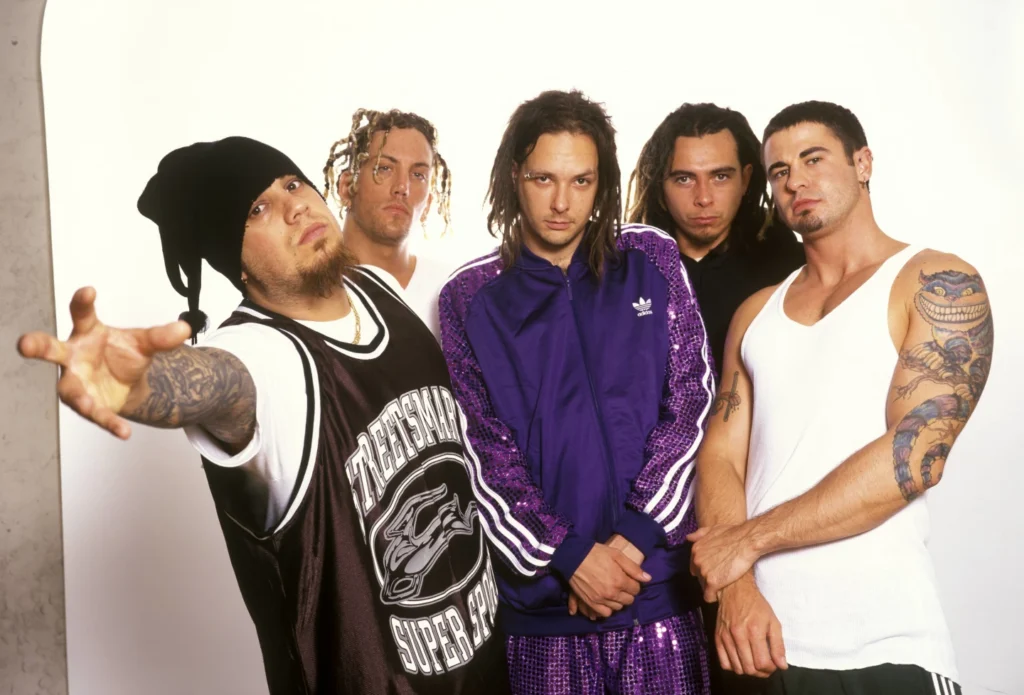
On this day 30 years ago, Korn release their second studio album Life Is Peachy.
The band’s sophomore effort marked a pivotal moment in the evolution of nu metal, building upon the groundbreaking sound of the band’s 1994 self-titled debut while pushing their aggression, experimentation, and emotional intensity to new extremes. Following nearly two years of relentless touring, frontman Jonathan Davis, guitarists James “Munky” Shaffer and Brian “Head” Welch, bassist Reginald “Fieldy” Arvizu, and drummer David Silveria returned to the studio with producer Ross Robinson, who had helped shape their distinctive sound on their debut. Recording at Indigo Ranch Studios in Malibu, California, the band embraced a spontaneous, largely collaborative writing process, developing material through jam sessions rather than meticulously planned compositions.
The resulting album was raw, chaotic, and deeply personal, combining downtuned seven-string guitars, Fieldy’s unmistakable percussive bass lines, hip-hop-inspired rhythms, and Davis’s unsettling mixture of whispers, screams, and emotional confessions. Standout tracks included the explosive lead single “No Place to Hide,” the groove-heavy “A.D.I.D.A.S.,” the confrontational “Good God,” and “Mr. Rogers,” alongside the band’s unconventional cover of Ice Cube’s “Wicked,” featuring Deftones frontman Chino Moreno. The album also featured the abrasive “Twist,” which showcased Davis’s signature scat-style vocal delivery, and a radically reimagined version of War’s “Low Rider.”
Upon its release, Life Is Peachy received a mixed response from music critics, with some praising Korn’s originality, fearless experimentation, and emotionally charged performances, while others criticized its abrasive production, disturbing lyrical themes, and lack of conventional song structures. However, the album resonated strongly with the band’s rapidly expanding fanbase, particularly younger listeners who connected with Davis’s expressions of anger, alienation, and personal trauma.
Commercially, the record represented a massive breakthrough, debuting at No. 3 on the Billboard 200 with approximately 106,000 copies sold during its first week, an extraordinary achievement for a band receiving relatively limited mainstream radio exposure. The album also reached No. 1 in New Zealand and No. 32 in the United Kingdom. It was certified gold in January 1997, platinum that December, and eventually double platinum by the Recording Industry Association of America in November 1999, representing two million units in the United States. Worldwide sales were reported at nearly three million copies by 2009, although a definitive updated global sales total for 2026 has not been publicly established. The album’s success was further reinforced by extensive touring, increasingly sold-out headlining performances, and a Grammy nomination for Best Metal Performance for “No Place to Hide.”
Thirty years after its release, Life Is Peachy remains one of Korn’s most influential and uncompromising records, capturing the band at a critical moment between underground notoriety and mainstream superstardom. Although its successor, 1998’s Follow the Leader, would propel Korn to even greater commercial heights, Life Is Peachy established that the group’s groundbreaking debut was no fluke and demonstrated that their unconventional combination of metal, hip-hop, funk, and intensely personal songwriting could attract a massive audience. Its success helped create the foundation for the nu metal explosion of the late 1990s and early 2000s, paving the way for bands such as Limp Bizkit, Slipknot, and countless others to achieve mainstream recognition.
While its chaotic production and deliberately confrontational approach have occasionally divided critics, those same qualities have made it a favorite among longtime fans who regard it as one of Korn’s rawest and most authentic releases. Three decades later, songs such as “A.D.I.D.A.S.,” “Good God,” and “Twist” remain defining examples of the band’s early sound, while the album itself stands as an essential chapter in the history of alternative metal. More than simply a successful sophomore effort, Life Is Peachy helped transform Korn from an emerging underground phenomenon into one of the most important and influential heavy bands of their generation.